
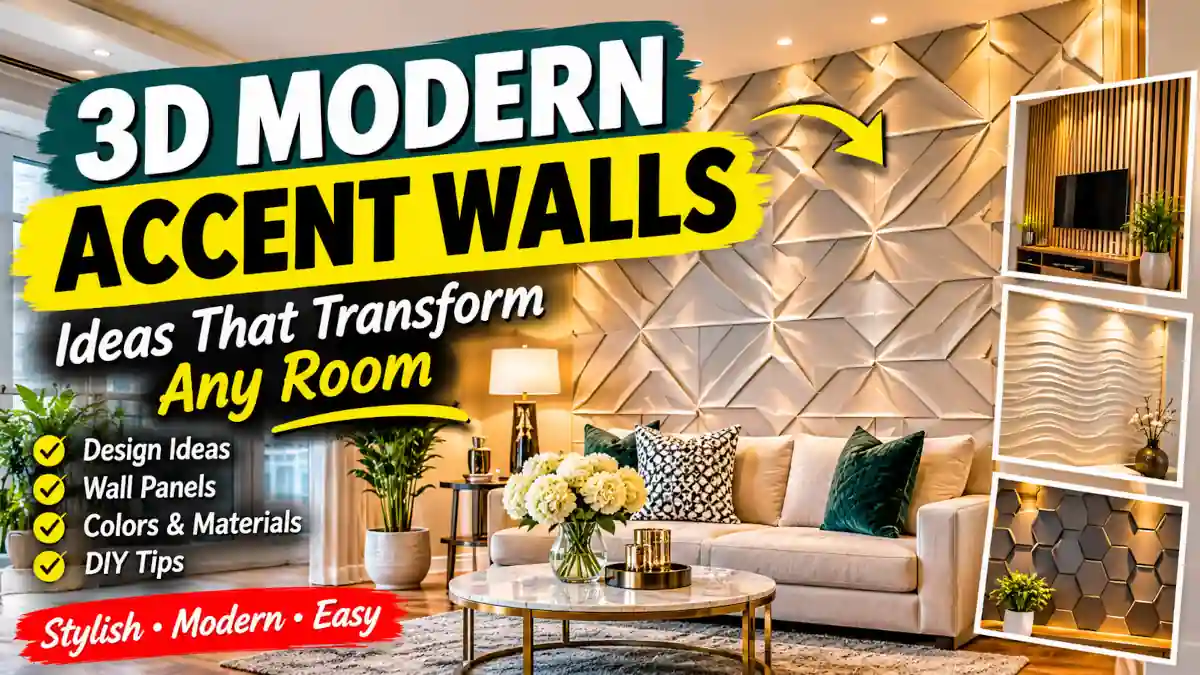
A 3D modern accent wall can transform a plain interior wall into a more noticeable architectural feature. Unlike a standard painted accent wall, a three-dimensional design adds physical depth, texture, shadows, and visual movement to the space.
Today, homeowners can create a 3D accent wall using decorative wall panels, wood slats, geometric designs, textured surfaces, and other architectural materials. These options can work in living rooms, bedrooms, entryways, dining rooms, and even home offices.
For homeowners across the United States, 3D wall panels are becoming a practical option for creating a modern focal point without redesigning an entire room. However, the best material and design depend on the room, wall condition, lighting, budget, and whether the project is DIY-friendly.
This guide explains popular 3D modern accent walls, common panel styles, materials, placement ideas, and practical considerations before starting a project.
Table of Contents
What Is a 3D Modern Accent Wall?
A 3D accent wall is a feature wall designed with materials or patterns that extend outward from the wall surface. This creates actual depth instead of relying only on paint color.
Common examples include:
- Geometric 3D wall panels
- Vertical wood slats
- Fluted wall designs
- Raised rectangular panels
- Textured decorative panels
- Wave-pattern wall panels
- Architectural molding
Light plays an important role in these designs. Natural daylight and interior lighting can create shadows across raised surfaces, making the texture more visible.
A successful modern design usually balances depth with simplicity. A wall with too many competing patterns may look visually busy, while a clean repeating design can create a more sophisticated focal point.

1. Popular Types of 3D Wall Panels
3D wall panels are available in many styles, allowing homeowners to choose a design that fits their interior.
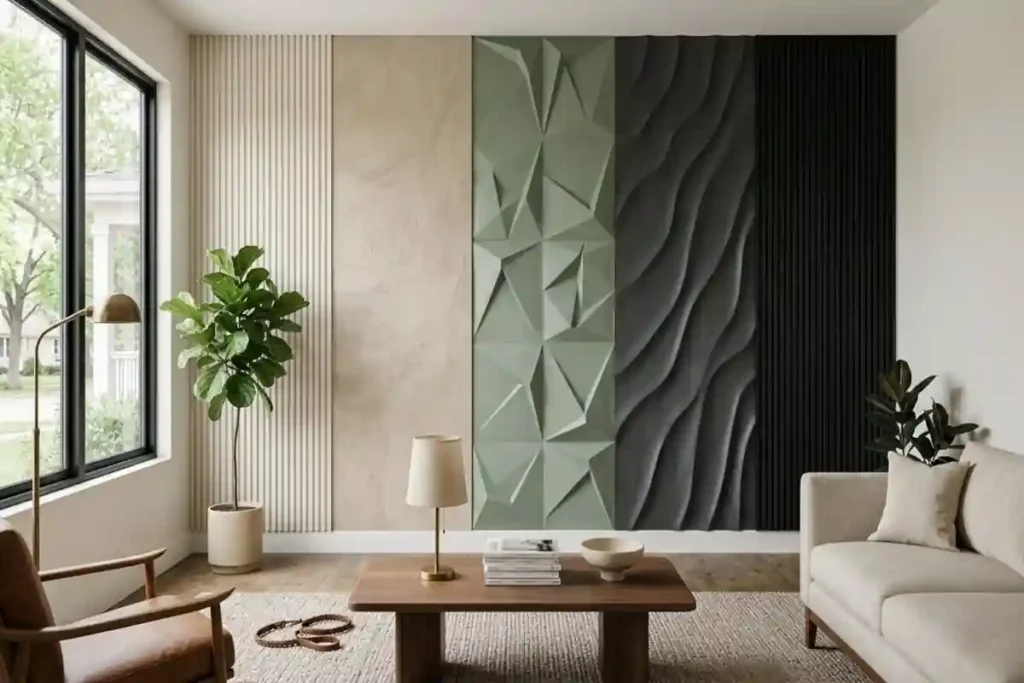
Geometric Panels
Geometric designs use repeated shapes, lines, and raised patterns. They often work well in contemporary living rooms and home offices.
Fluted Panels
Fluted panels use narrow vertical grooves or raised lines. They can create a clean, modern appearance while adding subtle texture.
Wave Panels
Wave-pattern panels add movement and curved shadows. These designs can create a softer look than sharp geometric patterns.
Raised Square or Rectangle Panels
These designs create an architectural appearance and can work with both modern and transitional interiors.
When selecting accent wall panels, consider how strong the texture will appear from normal viewing distance. A highly detailed design may work best on one focal wall rather than throughout an entire room.
2. Geometric 3D Accent Wall Ideas
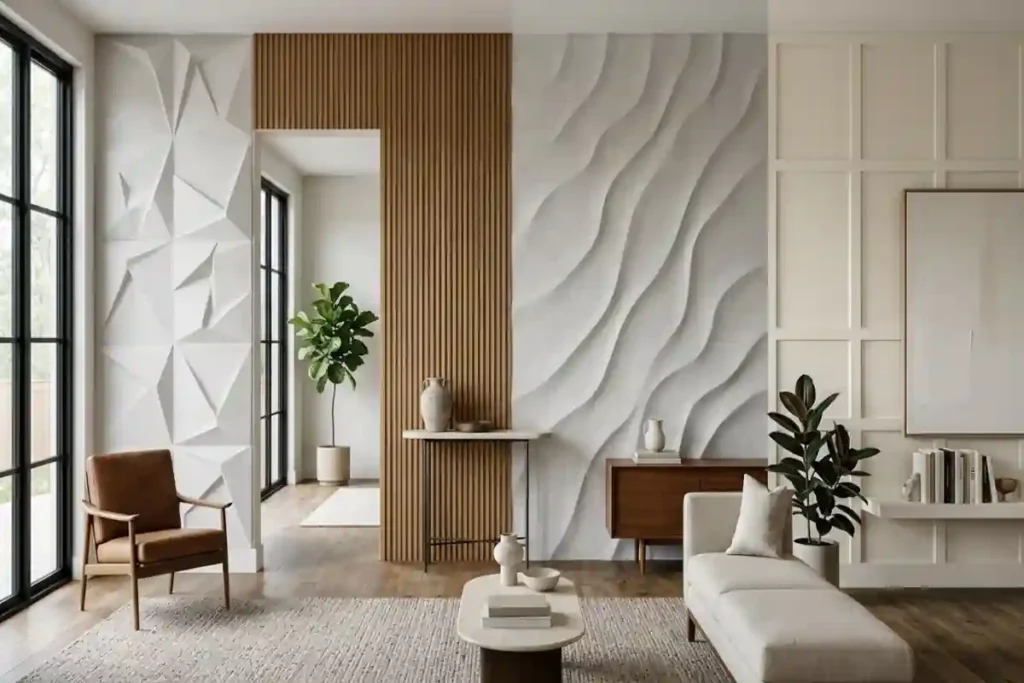
A geometric 3D accent wall can add strong architectural character to a room.
Popular designs include:
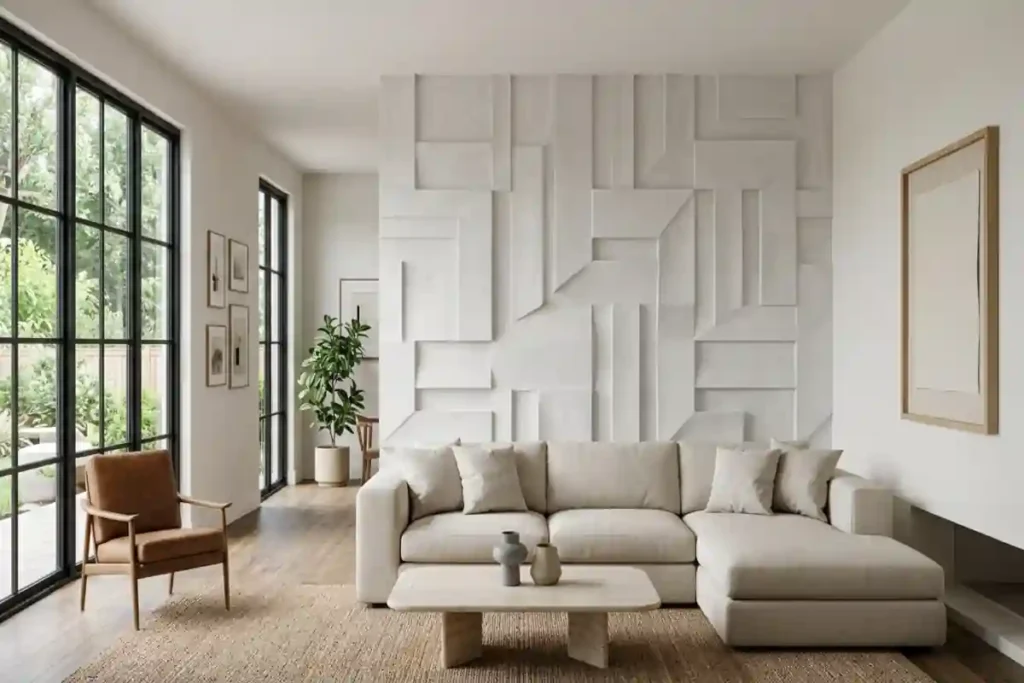
- Interlocking rectangles
- Diamond patterns
- Angular lines
- Raised hexagons
- Repeating square patterns
- Modern asymmetrical designs
These walls often work best behind a sofa, television, or bed because they naturally support an existing focal point.
For a more subtle appearance, choose panels close in color to the surrounding wall. For stronger contrast, use darker paint or a different material.
Before choosing a complex design, consider the size of the wall. Large patterns can work well on wide surfaces, while smaller repeating details may be better suited to compact areas.
3. Fluted and Vertical 3D Wall Designs
Fluted and vertical designs are popular because they add texture without making a room feel overly busy.
Vertical lines can visually emphasize height and create a clean architectural effect.
Common options include:
- Fluted MDF panels
- Vertical wood slats
- Decorative grooved panels
- Painted vertical molding
- Wood-look wall panels
These designs often work well behind a television or bed.
The appearance of the wall can change significantly depending on lighting. Side lighting can emphasize the depth of the grooves, while direct lighting may create a softer appearance.
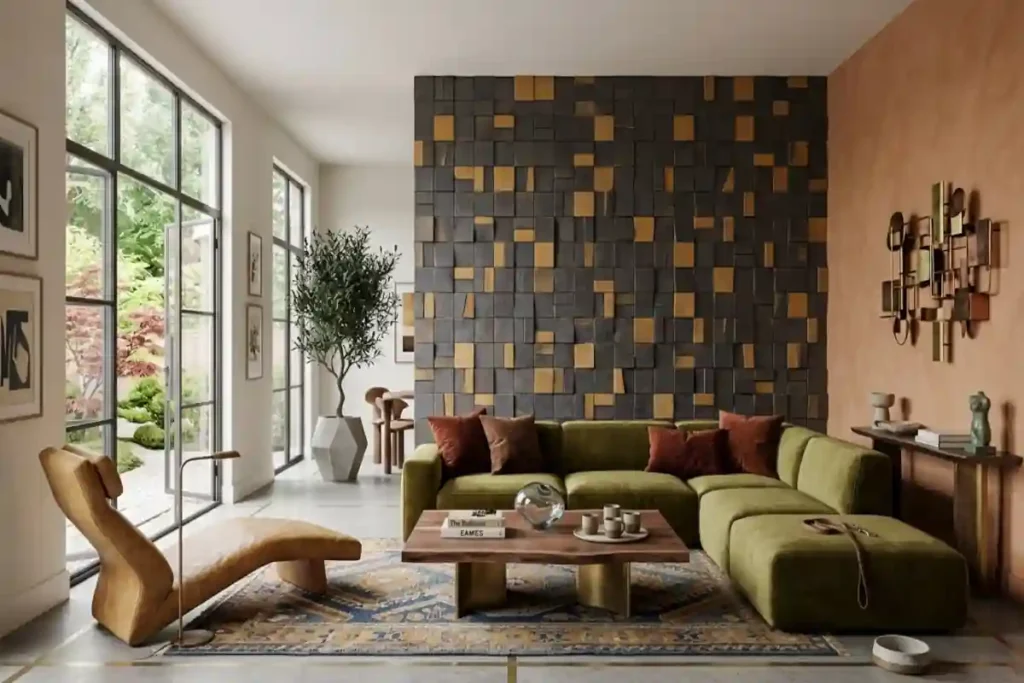
4. 3D Modern Accent Walls for Living Rooms
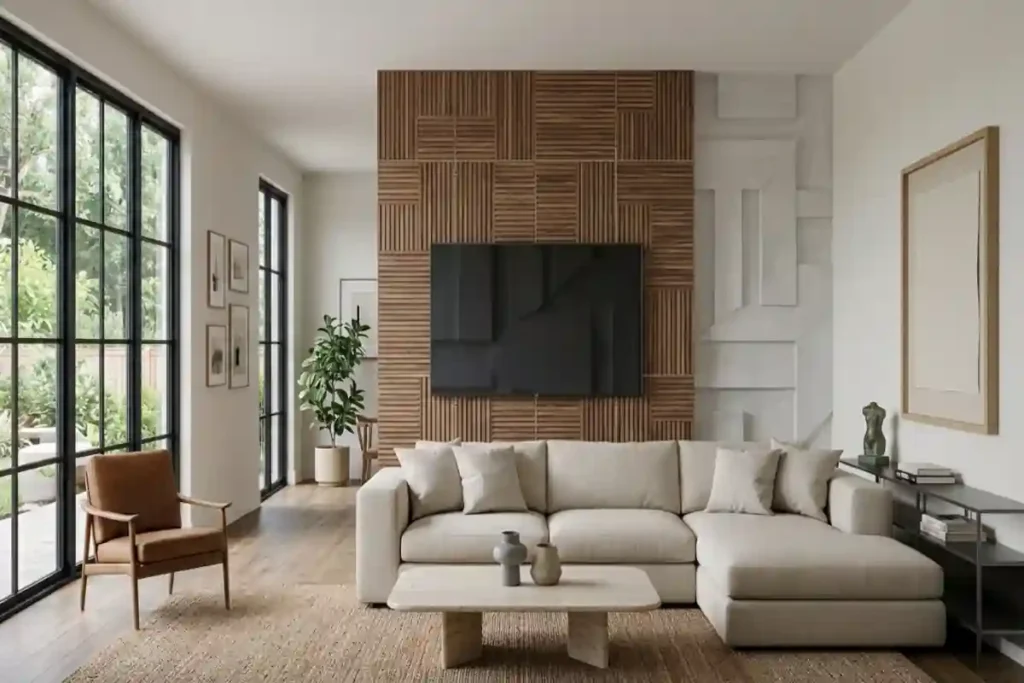
The living room is one of the most popular locations for a modern accent wall because it often contains a natural focal point.
A 3D design can be placed:
- Behind the sofa
- Behind the television
- Around a fireplace
- On the largest blank wall
Before choosing the wall, look at the room’s furniture arrangement. The best accent wall should usually support the existing layout instead of competing with multiple focal points.
Neutral 3D panels can create subtle depth, while darker colors can create stronger contrast.
For smaller living rooms, a simple repeating pattern may be more suitable than a highly complex design.
5. 3D Accent Walls for Bedrooms
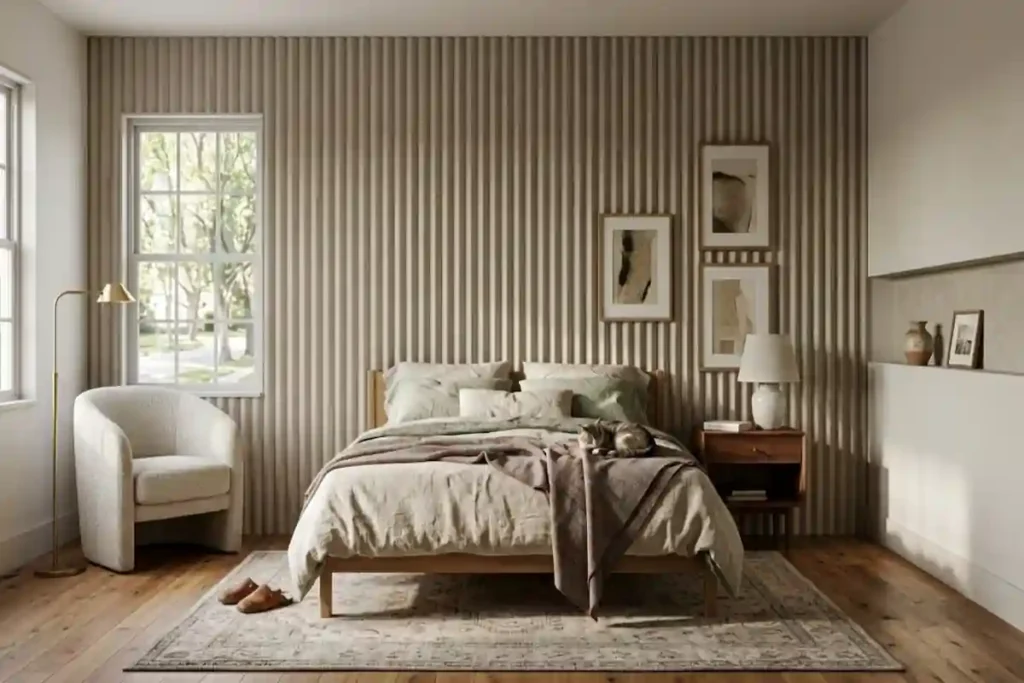
A bedroom accent wall is often placed behind the bed because the headboard area naturally acts as a focal point.
Popular bedroom options include:
- Soft fluted panels
- Warm wood slats
- Geometric raised panels
- Upholstered wall panels
- Subtle textured designs
For a calm bedroom, neutral colors and softer patterns may be preferable.
Darker designs can create a dramatic appearance, but they should be balanced with bedding, lighting, and surrounding wall colors.
The goal is to create visual interest without making the sleeping area feel overly busy.
The material you choose affects appearance, durability, installation, and maintenance.
Common options include:
Wood
Wood can add warmth and natural texture. It may be used as slats, panels, or custom patterns.
MDF
MDF can be useful for painted decorative panel designs. The material and installation method should be appropriate for the room’s moisture conditions.
PVC and Decorative Panels
Some decorative panels are designed to be lightweight and easier to install. Always check the manufacturer’s specifications before purchasing.
Gypsum or Plaster Designs
These can create more permanent architectural textures but may require specialized installation.
When comparing 3D wall panels, consider the wall condition, room environment, fire-safety requirements, installation instructions, and local building requirements where applicable.

7. Colors for Modern 3D Accent Walls
Color can change how deeply the three-dimensional pattern appears.
Popular modern options include:
- Warm white
- Soft beige
- Greige
- Sage green
- Charcoal
- Matte black
- Natural wood tones
A single-color 3D wall can emphasize shadows and texture without adding too much visual complexity.
Darker colors often create stronger shadows, while lighter colors can create a softer and more subtle appearance.
Before final installation or painting, view samples in your room’s natural and artificial lighting.
8. How to Plan and Install a 3D Accent Wall
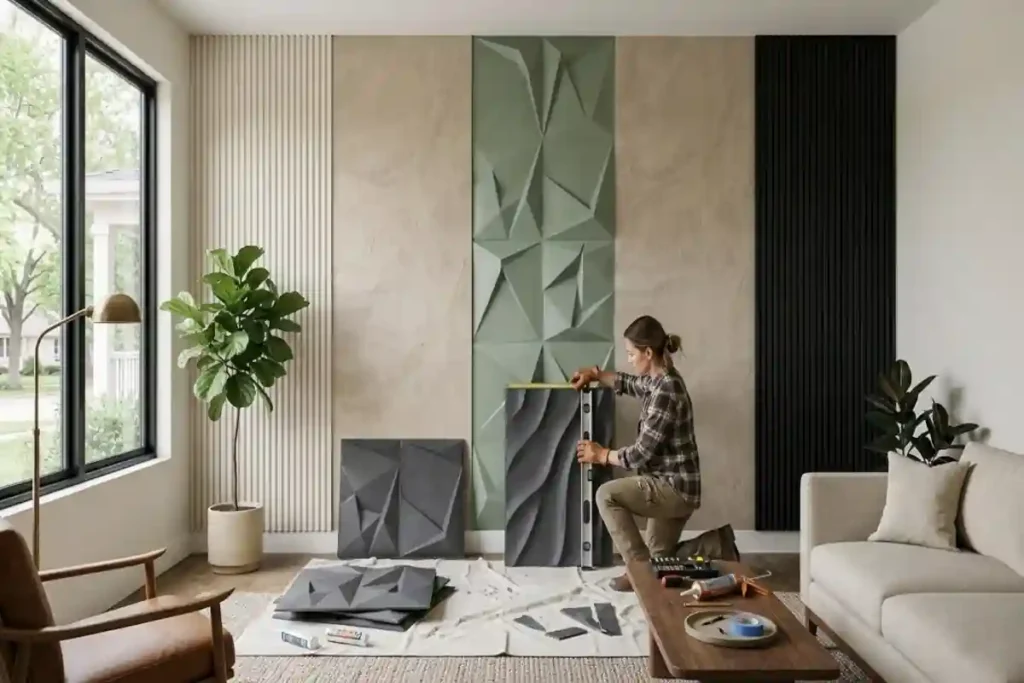
Installation methods vary depending on the panel material and wall system.
A general planning process may include:
- Measuring the wall carefully.
- Checking whether the wall is clean, dry, and suitable for the chosen material.
- Planning the panel layout before permanent installation.
- Following the manufacturer’s installation instructions.
- Checking alignment regularly during installation.
- Finishing edges and transitions carefully.
Some projects may be appropriate for experienced DIY homeowners. Complex installations, electrical changes, heavy materials, or structural modifications may require a qualified professional.
For homes in the United States, follow applicable local building requirements, particularly when modifying walls around electrical outlets, fireplaces, or other building systems.
9. Common Mistakes to Avoid
A 3D wall can look impressive, but planning mistakes may affect the final appearance.
Choosing a Pattern That Is Too Busy
Highly detailed panels may overwhelm a small room.
Ignoring Lighting
Lighting affects how shadows reveal the wall’s depth.
Selecting the Wrong Wall
Choose a wall that naturally supports the room’s focal point.
Forgetting About Panel Thickness
Three-dimensional materials extend outward and may affect trim, outlets, switches, and furniture placement.
Mixing Too Many Styles
A dramatic 3D wall often works best when surrounding decor remains relatively simple.

Frequently Asked Questions
What is a 3D accent wall?
A 3D accent wall uses raised panels, textured materials, slats, or architectural patterns to create physical depth and visual shadows.
Are 3D wall panels good for accent walls?
3D wall panels can be a useful option for creating a textured focal wall. The best choice depends on the panel material, room conditions, installation requirements, and overall design.
Where should a 3D accent wall be placed?
Popular locations include behind a sofa, television, bed, or fireplace. Choose a wall that naturally acts as a focal point.
Can a 3D accent wall work in a small room?
Yes. Simple patterns and lighter colors can add depth without making a smaller room feel visually crowded.
Are 3D wall panels easy to install?
Installation difficulty varies by product and wall condition. Always follow the specific manufacturer’s instructions, and consider professional installation for complex or heavy materials.
Final Thoughts
3D modern accent walls offer a way to add depth, texture, and architectural interest to an interior without redesigning an entire room.
From geometric accent wall panels to fluted designs and natural wood textures, there are options for different interior styles and room sizes.
The best 3D accent wall is one that supports the room’s existing focal point, works with available lighting, and complements the surrounding furniture and materials.
Before choosing a design, compare materials, plan the layout carefully, and consider how the wall will look in your home’s actual lighting. A well-designed 3D wall can become a lasting focal point while keeping the rest of the room visually balanced.