

Quick Answer
Contemporary accent walls are feature walls designed to create visual interest through color, texture, wood, panels, wallpaper, tile, or architectural details. The best contemporary designs use clean lines, balanced proportions, and materials that complement the rest of the room rather than overpowering it.
A contemporary accent wall can completely change how a room feels.
You don’t necessarily need an expensive renovation, custom cabinetry, or a complete redesign. Sometimes one carefully chosen wall can introduce warmth, depth, texture, or contrast to a space that otherwise feels plain.
The key is choosing the right wall and the right material.
Modern homes often use accent walls differently than older decorating styles. Instead of simply painting one wall a dramatically different color, many contemporary accent wall ideas focus on texture, architectural detail, natural materials, and subtle contrast.
Key Takeaways
- Contemporary accent walls use color, texture, materials, or architectural details to create a focal point.
- Wood, wallpaper, wall panels, paint, and tile can all work in contemporary interiors.
- The best accent wall is usually the room’s natural focal point.
- An accent wall doesn’t have to be dark to stand out.
- Simple, well-proportioned designs often remain visually appealing longer than overly complicated patterns.
Table of Contents
What Are Contemporary Accent Walls?
A contemporary accent wall is one wall or architectural surface designed to stand out from the surrounding walls through color, texture, material, pattern, or construction detail.
Contemporary design generally reflects current design preferences rather than one fixed historical style.
That gives you flexibility.
A contemporary wall might feature warm natural oak in one home and a large-scale textured plaster finish in another.
Common contemporary accent wall materials include:
- Interior paint
- Natural wood
- Wood slats
- Decorative wall panels
- Wallpaper
- Tile
- Stone
- Plaster-style finishes
- Decorative molding
The goal isn’t simply to make one wall different.
It should give the room a stronger focal point.
Are Contemporary Accent Walls Still in Style?
Yes. Contemporary accent walls are still popular, although the designs that feel current have changed.
Many homeowners now prefer texture and architectural details over random bold colors.
Popular approaches include:
- Vertical wood slats
- Large-scale wall panels
- Warm neutral paint
- Deep green and blue tones
- Textured finishes
- Natural materials
- Minimal geometric patterns
A common mistake we see is assuming that an accent wall needs to be extremely bold.
It doesn’t.
A subtle difference in texture can create just as much impact as a dramatic paint color.
1. Contemporary Painted Accent Walls
A painted wall remains one of the easiest and most affordable contemporary accent wall ideas.
The design can be simple, but the color choice matters.
Popular contemporary accent wall colors include:
- Deep navy
- Charcoal
- Forest green
- Sage green
- Warm gray
- Soft taupe
- Earthy brown
- Muted terracotta
A darker color can create depth behind a sofa or bed, while a lighter contrasting color can make a room feel softer.
Best for:
- Bedrooms
- Living rooms
- Dining rooms
- Home offices

2. Contemporary Wood Accent Walls
Wood adds warmth that paint alone cannot always provide.
A contemporary wood accent wall can use:
- Natural oak
- Walnut tones
- Wood veneer
- Reclaimed wood
- Smooth finished panels
Wood works especially well in rooms that have white, gray, beige, or neutral furniture.
The contrast between warm wood and clean modern surfaces creates a balanced contemporary look.

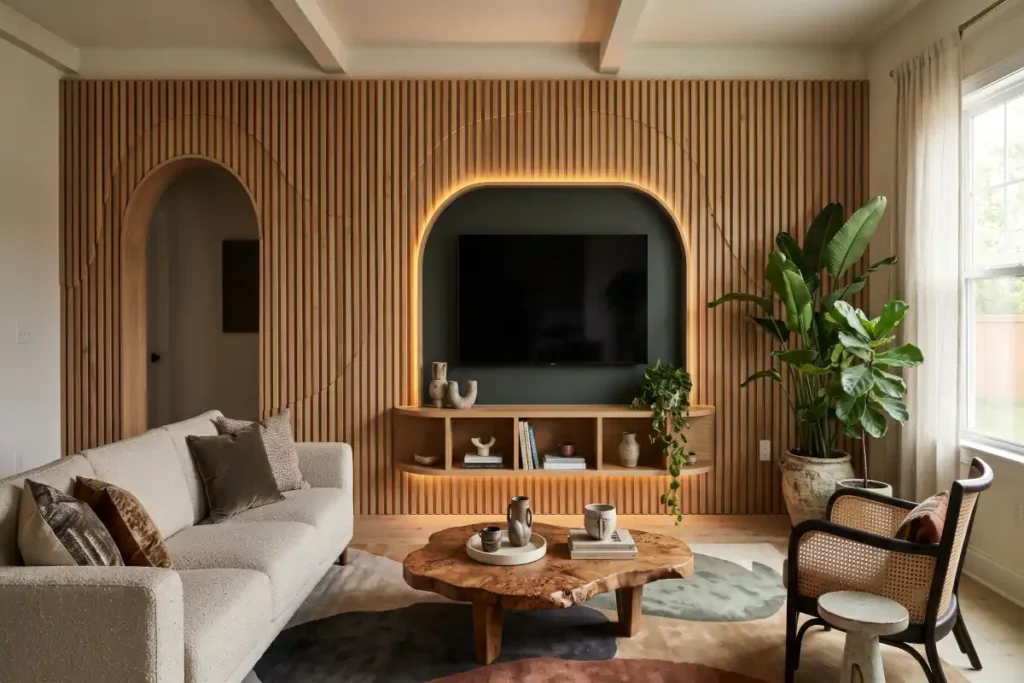
3. Vertical Wood Slat Accent Walls
Vertical slats are among the most recognizable modern accent wall designs.
The repeated vertical lines can make a wall feel taller and more architectural.
They work well:
- Behind a TV
- Behind a bed
- In an entryway
- Behind a desk
Should wood slats cover the entire wall?
Not always.
A partial installation can create a cleaner and more affordable design.
For example, vertical slats behind a television or bed can define the focal area without covering every square foot.
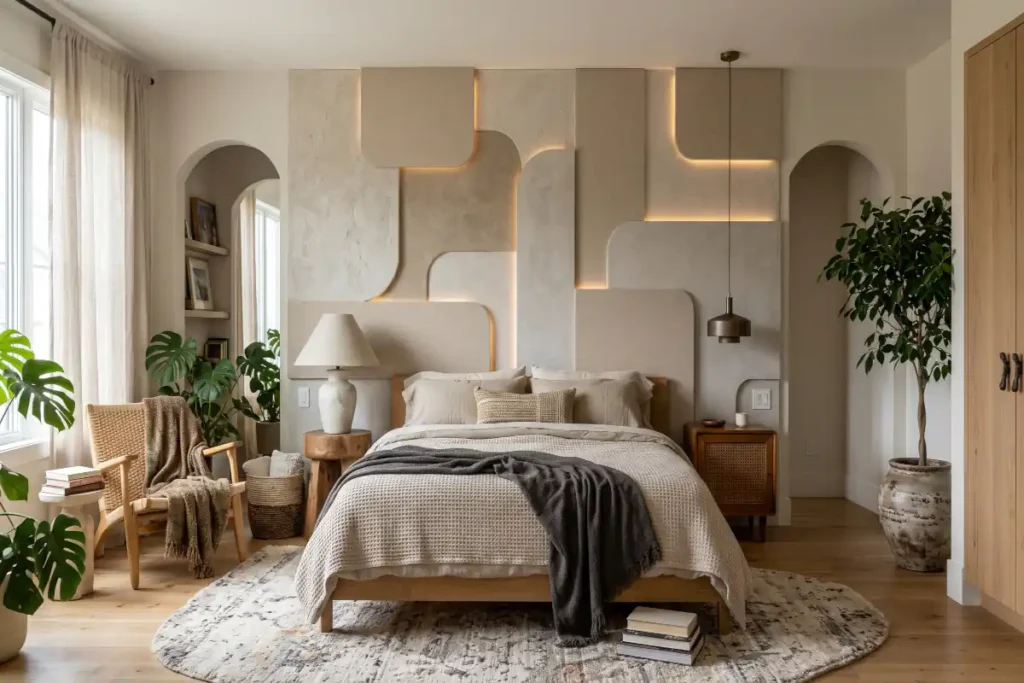
4. Contemporary Accent Wall Panels
Decorative wall panels can create depth without requiring an entire wall to be built from scratch.
Modern options include:
- Flat MDF panels
- Fluted panels
- Ribbed textures
- Large geometric panels
- Acoustic-style slat panels
The best contemporary designs usually use proportion and repetition carefully.
Too many small panels can make a room feel visually busy.
Larger, cleaner shapes often create a more sophisticated result.
5. Contemporary Wallpaper Accent Walls
Wallpaper gives you access to patterns and textures that are difficult to reproduce with paint.
Contemporary wallpaper designs often feature:
- Abstract patterns
- Soft geometric shapes
- Botanical designs
- Textured finishes
- Large-scale artwork
For a bedroom, wallpaper behind the bed can create a strong focal point.
In a living room, choose a pattern that works with the furniture rather than competing against it.

6. Contemporary Accent Wall Behind the Bed
The wall behind the bed is one of the most natural places for a bedroom accent wall.
The bed already creates a visual center.
That means you can use the wall to frame the furniture rather than creating a focal point in a random location.
Good options include:
- Vertical wood slats
- Painted walls
- Wallpaper
- Decorative molding
- Upholstered panels
- Large textured panels
What we recommend: Keep the design centered around the bed whenever possible.
A wall pattern that doesn’t align with the furniture can sometimes feel unbalanced.

7. Contemporary Accent Wall Behind a TV
A TV wall can easily become the main focal point of a living room.
A contemporary accent wall behind the television can make the screen feel integrated into the room rather than appearing as an isolated black rectangle.
Popular materials include:
- Wood slats
- Dark paint
- Large wall panels
- Stone-look surfaces
- Decorative tile
Important consideration
Plan around:
- Cable management
- Electrical outlets
- TV mounting requirements
- Ventilation for electronics
Avoid permanently installing decorative materials without thinking about future access to wiring.

8. Contemporary Accent Walls With Trim and Molding
Trim can create a contemporary look when the pattern remains simple.
Popular designs include:
- Large rectangles
- Vertical sections
- Wide frames
- Simple grids
Avoid creating dozens of tiny shapes unless the room’s architecture supports the design.
Simple accent wall designs often look more intentional.

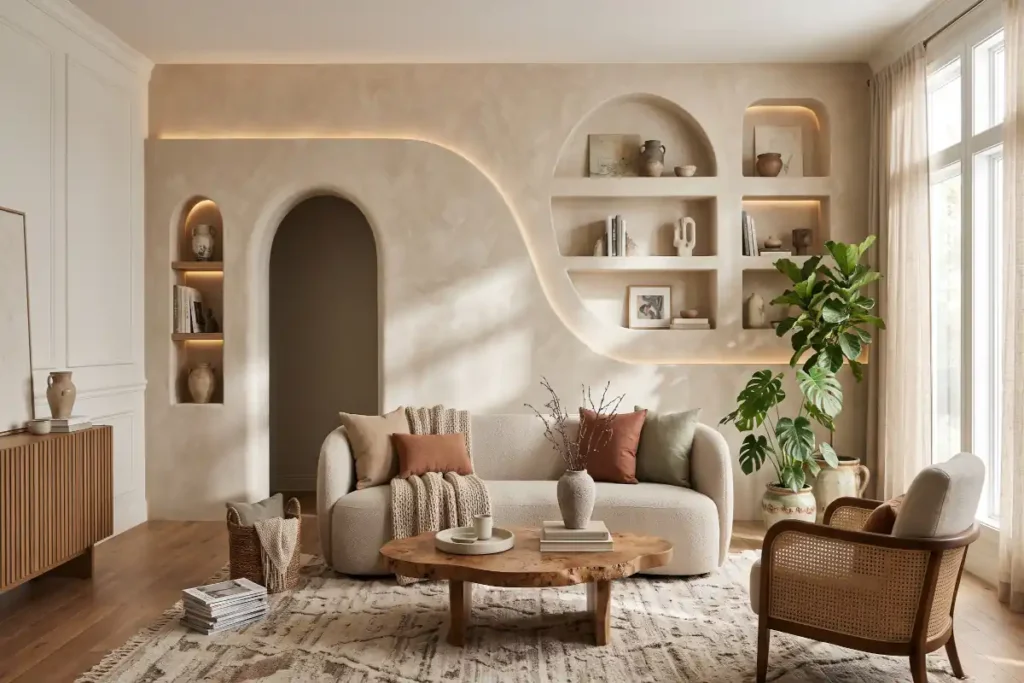
9. Contemporary Textured Accent Walls
Texture can make an accent wall stand out without using a strong color.
Examples include:
- Plaster-style finishes
- Limewash-style effects
- Concrete-inspired surfaces
- Fine textured panels
These walls often work best with neutral colors.
The texture becomes the main visual feature.
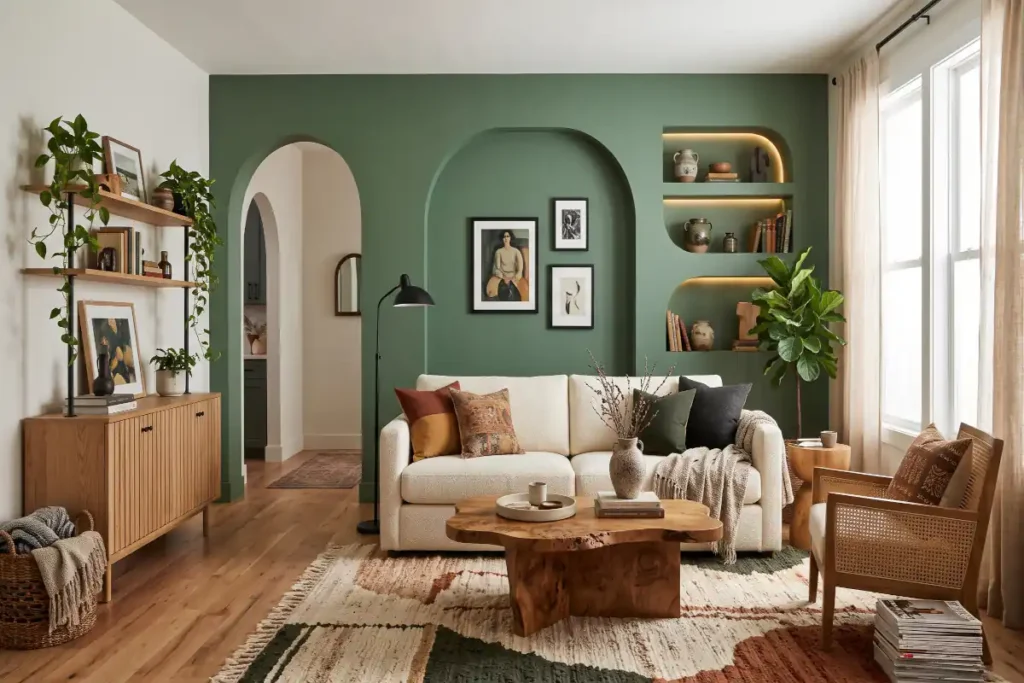
10. Contemporary Green Accent Walls
Green remains a versatile choice for contemporary interiors.
Soft sage can feel calm.
Deep forest green can feel dramatic and sophisticated.
Green often works especially well with:
- Natural wood
- Cream furniture
- Black accents
- Brass details
- Warm white lighting
Before choosing a color, test it in your actual room.
Natural light can make the same paint color look different throughout the day.
11. Contemporary Black Accent Walls
Black can create a dramatic accent wall without looking outdated when used carefully.
It works especially well in rooms with:
- Strong natural light
- Light-colored furniture
- Warm wood floors
- White or cream surrounding walls
A matte finish can help create a softer, more contemporary appearance than a highly reflective surface.

12. Contemporary Accent Walls in Living Rooms
The best contemporary accent wall in a living room usually supports the room’s natural focal point.
That might be:
- Behind the sofa
- Behind the TV
- Around a fireplace
- A large architectural wall
Where should an accent wall go in a living room?
- Choose the wall your eye naturally notices first.
- Avoid selecting a wall simply because it is empty.
- A common mistake is creating an accent wall on a random surface while ignoring the room’s strongest architectural feature.
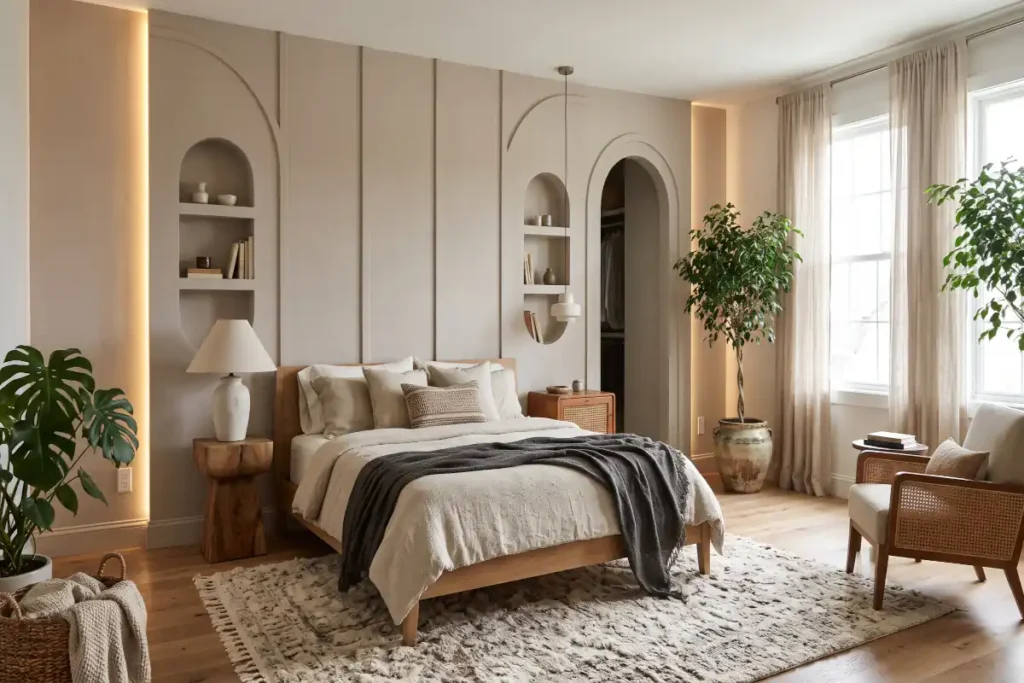
13. Contemporary Bedroom Accent Wall Ideas
Bedrooms benefit from accent walls because they can create a sense of calm and visual structure.
Good materials include:
- Soft paint
- Natural wood
- Wallpaper
- Upholstered panels
- Subtle molding
The wall behind the bed remains the most popular choice.
For a small bedroom, avoid designs that are overly busy or made from many competing colors.
14. Contemporary Accent Walls for Entryways
An entryway accent wall creates an immediate first impression.
Because entryways are often smaller, a single material can make a significant impact.
Consider:
- Vertical wood slats
- Wallpaper
- Textured paint
- A large mirror with a subtle feature wall
Keep the design practical.
Entryways experience more traffic than many bedrooms, so delicate finishes may require more maintenance.
15. Contemporary Accent Walls With a Fireplace
A fireplace wall is already an architectural focal point.
Instead of competing with it, build the accent design around it.
Possible materials include:
- Tile
- Stone
- Wood
- Large-format panels
- Textured finishes
Be careful with materials placed near fireplaces.
Always follow the fireplace manufacturer’s requirements and applicable safety guidance for heat clearance and combustible materials.

How to Choose the Best Wall for a Contemporary Accent Wall
Ask yourself four questions:
Which wall is the room’s natural focal point?
Choose a wall connected to major furniture or architecture.
Does the wall have too many interruptions?
Multiple doors, windows, and outlets can complicate a design.
How much natural light does the room receive?
Dark colors can behave differently in bright and low-light rooms.
How permanent should the design be?
Paint is easy to change.
Tile and custom woodwork are more permanent.
Contemporary Accent Wall Colors: Dark or Light?
A contemporary accent wall does not have to be darker.
Dark colors can create depth and drama.
Lighter colors can stand out through:
- Texture
- Material contrast
- Architectural panels
- Wood grain
The surrounding walls, flooring, and furniture should guide your decision.
Contemporary Accent Walls: Who Are They For?
This style is a good fit for:
- Homeowners updating one room
- Renters using removable wallpaper where permitted
- People who want visual interest without remodeling an entire room
- Anyone trying to create a stronger focal point
You may want to avoid a complex accent wall if:
- The wall has unresolved moisture damage.
- You plan to move very soon and prefer minimal personalization.
- The project requires electrical or structural changes beyond your experience.
- Your room already contains many competing patterns.
Common Contemporary Accent Wall Mistakes
Choosing a random wall
Not every wall should become a feature wall.
Using too many materials
Wood, tile, wallpaper, mirrors, and lighting don’t always need to appear on the same surface.
Ignoring proportions
A pattern that looks good online may not work on your wall dimensions.
Forgetting lighting
Wall colors and textures can look dramatically different at night.
Copying a trend exactly
Use inspiration, but adapt the design to your own furniture and room.
Are Contemporary Accent Walls Worth It?
For many homeowners, yes.
An accent wall can provide a noticeable visual update without changing every surface in the room.
However, expensive materials aren’t always necessary.
A well-chosen paint color or simple wood treatment can sometimes create a stronger result than a complicated custom installation.
The best design is one that fits your room rather than simply following the most popular image online.
Summary
Contemporary accent walls use color, texture, wood, panels, wallpaper, tile, and architectural details to create a focal point in a room.
For a bedroom, the wall behind the bed is often the strongest choice. In a living room, the best location may be behind a sofa, TV, or fireplace.
Keep the design balanced, choose materials that fit your lifestyle, and remember that simple contemporary designs can often remain appealing longer than overly complicated patterns.
Frequently Asked Questions
What are contemporary accent walls?
Contemporary accent walls are feature walls that use current design approaches such as clean lines, natural materials, texture, modern colors, wallpaper, wood, or decorative panels. They are designed to create a focal point while complementing the overall room rather than overwhelming it.
Are contemporary accent walls still in style?
Yes. Contemporary accent walls remain popular, especially designs using wood slats, textured finishes, wall panels, and sophisticated paint colors. The most timeless designs usually focus on good proportions and materials rather than copying an extremely short-term trend.
Which wall should be an accent wall?
The best wall is usually the room’s natural focal point. In bedrooms, this is often behind the bed. In living rooms, it may be behind the sofa, television, or fireplace. Avoid choosing a wall randomly just because it is empty.
Do contemporary accent walls have to be darker?
No. A contemporary accent wall can be lighter, darker, or similar in color to surrounding walls. Texture, wood grain, wallpaper, or decorative panels can create contrast without requiring a dark paint color.
What is the best contemporary accent wall for a living room?
Popular living room choices include wood slats behind a TV, textured finishes behind a sofa, dark painted walls, and fireplace feature walls. The best choice depends on the room’s natural focal point, lighting, furniture, and overall color palette.
Are wood accent walls contemporary?
Yes. Natural wood can work extremely well in contemporary interiors, especially when used with clean lines and balanced proportions. Oak, walnut, wood slats, veneer panels, and simple architectural wood details are popular contemporary options.
Can a contemporary accent wall have windows?
Yes. A wall with windows can still work as an accent wall. The design simply needs to account for the window placement. Paint and subtle textures often work more easily than highly structured panel designs requiring precise symmetry.
Do contemporary accent walls make a room look smaller?
Not necessarily. Dark colors may create a more intimate feeling, while vertical lines can visually emphasize height. The effect depends on lighting, wall color, furniture placement, and the overall design rather than the accent wall alone.