
Quick Answer
Accent walls ideas with wood include vertical wood slats, geometric trim patterns, wood panels, herringbone designs, reclaimed wood, and simple board-and-batten layouts. The best design depends on your room size, lighting, existing furniture, and budget. A well-designed wood accent wall can add warmth, texture, and visual interest without remodeling the entire room.
If you’re looking for accent walls ideas with wood, you have far more options than simply covering a wall with wooden boards. Wood can be used as thin strips, decorative trim, large panels, natural planks, geometric patterns, or modern vertical slats.
The good news is that many DIY accent wall ideas with wood can be adapted for different budgets and skill levels.
Whether you’re decorating a bedroom, living room, office, bathroom, or dining room, the right wood accent wall can become the focal point of the space.
Key Takeaways
- Wood accent walls can be modern, rustic, traditional, minimalist, or highly decorative.
- Vertical wood slats are one of the most popular modern accent wall styles.
- Simple wood trim designs are often easier and less expensive than full wood paneling.
- The wall behind a bed, sofa, dining table, or desk often works best as an accent wall.
- Always consider moisture, wall condition, lighting, and local building requirements before installing permanent materials.
Who Is This Article For?
This article is for homeowners, renters planning removable upgrades, DIY enthusiasts, and anyone looking for wood accent wall ideas for a US home.
You may want to avoid a permanent wood installation if you rent and your landlord doesn’t allow wall modifications, if the wall has unresolved moisture problems, or if you’re uncomfortable using power tools. In those situations, lightweight panels or removable decorative solutions may be a better choice.
Table of Contents
1. Vertical Wood Slat Accent Wall
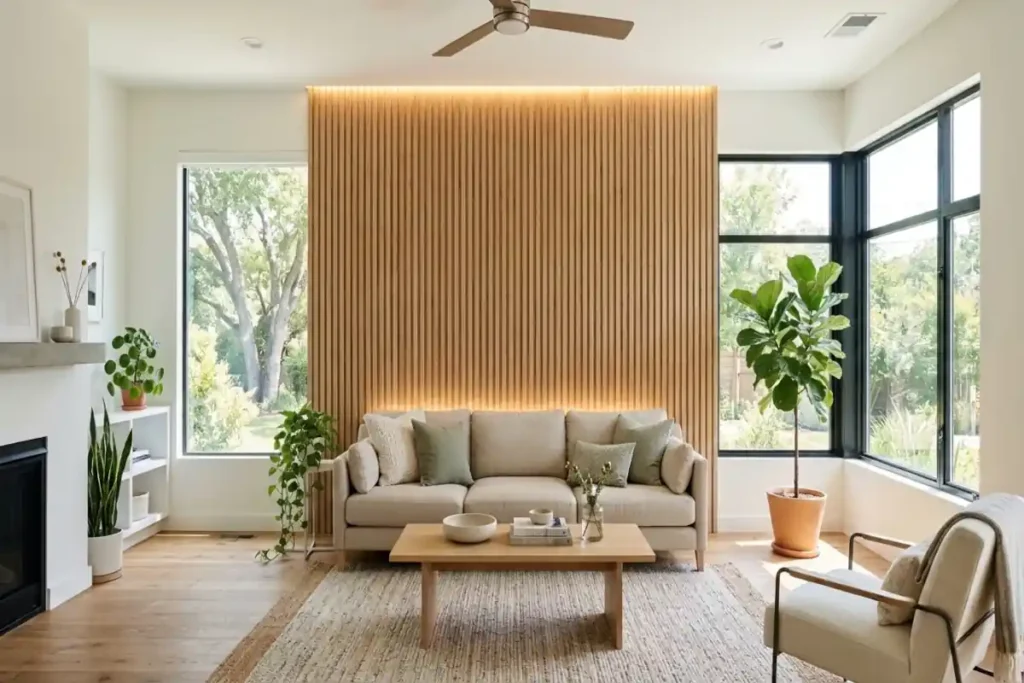
A vertical wood slat accent wall uses evenly spaced narrow wooden strips to create a clean, modern appearance.
This is one of the most popular accent wall ideas with wood slats because it works behind beds, TVs, sofas, and desks.
Vertical lines can also make a standard-height room feel visually taller.
Best for:
- Living rooms
- Bedrooms
- Home offices
- Entryways
Common materials: MDF slats, natural wood, plywood strips, or acoustic-style wood panels.

2. Simple Wood Trim Grid Accent Wall
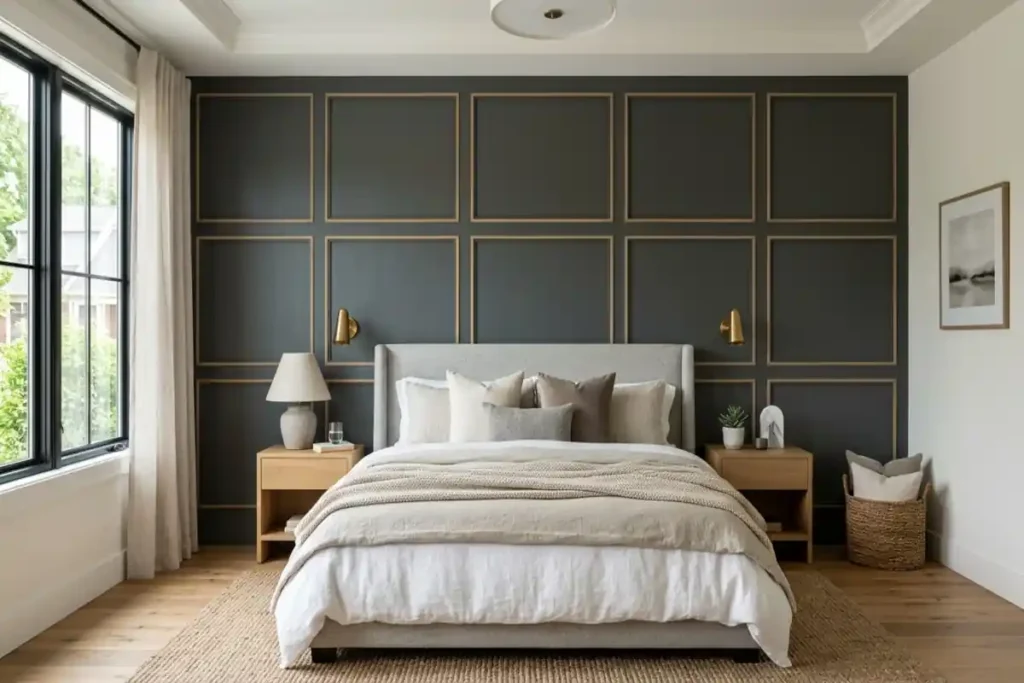
A wood trim grid creates a structured design without covering the entire wall in solid wood.
This is one of the easiest accent wall ideas with wood trim because thin boards can create rectangles or squares over an existing painted wall.
You can paint the trim and wall the same color for a subtle look or use contrasting colors for more definition.
A common mistake we see is:
Making every box exactly the same size without considering furniture placement. Plan the design around your bed, sofa, artwork, or TV first.
3. Geometric Wood Strip Accent Wall
Thin wood strips can be arranged into triangles, diagonals, diamonds, or abstract patterns.
A geometric accent wall with wood strips gives you more creative freedom than traditional paneling.
The key is planning the pattern before cutting anything.
How to approach it:
- Measure the wall.
- Sketch the design.
- Mark your layout with painter’s tape.
- Check spacing from across the room.
- Cut and install the wood.

4. Board and Batten Wood Accent Wall
Board and batten is a wall treatment that uses vertical boards or battens to create dimension and repeated patterns.
It can be installed halfway up the wall or from floor to ceiling.
For homeowners who prefer simple accent wall designs with wood, this is often one of the most versatile options.
Best rooms:
- Bedrooms
- Hallways
- Dining rooms
- Entryways

5. Wood Accent Wall Behind the Bed
The wall behind the bed is one of the most natural places for a bedroom accent wall.
Wood accent wall ideas for bedroom spaces can include vertical slats, wood panels, trim frames, or a simple headboard-height design.
You don’t always need to cover the entire wall. A partial wood feature behind the bed can create a strong focal point while keeping the room from feeling too heavy.

6. Herringbone Wood Accent Wall
A herringbone pattern uses wood pieces arranged in repeated angled sections.
It creates more movement than straight vertical or horizontal boards.
This design can look traditional or modern depending on the wood color and surrounding furniture.

7. Dark Wood Accent Wall
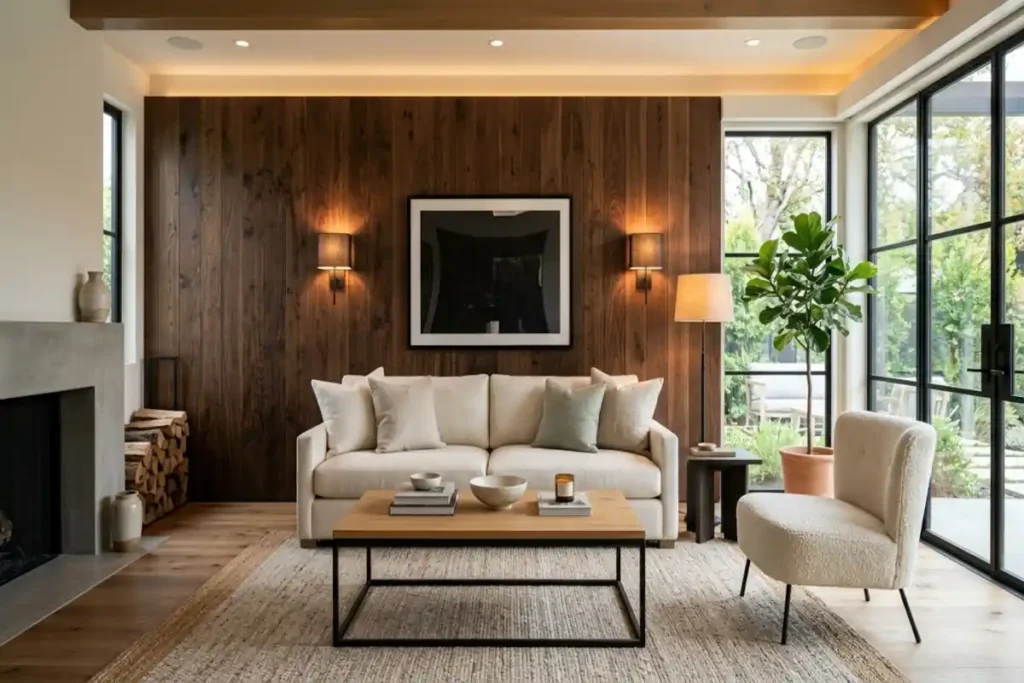
Dark walnut, espresso, or deep stained wood can create a dramatic focal point.
A dark design works particularly well in rooms with good natural or artificial lighting.
If the room is small and already dark, consider using dark wood on only one section rather than every wall.
What color goes with wood walls?
Warm whites, soft beige, cream, muted green, charcoal, and some natural gray tones often pair well with wood. The best choice depends on whether your wood has warm, cool, red, golden, or neutral undertones.
8. Light Oak Wood Accent Wall
Light oak creates a brighter and more relaxed look than dark wood.
It’s particularly useful when you want warmth without making a small room feel visually enclosed.
Light wood also works well with Scandinavian, minimalist, coastal, and modern interior styles.
9. Reclaimed Wood Accent Wall
Reclaimed or weathered wood can add character, color variation, and texture.
This style works especially well in rustic homes, cabins, farmhouse interiors, and spaces that need more visual warmth.
Before using reclaimed materials indoors, make sure the wood is clean, dry, and suitable for interior use.

10. Wood Accent Wall With a TV
A wood accent wall with a TV can make an entertainment area look more intentional.
Vertical slats are particularly popular because the lines frame the television without creating too much visual clutter.
Plan cable management before installing the wood.
A common installation mistake is finishing the wall first and then realizing there is no easy route for power or low-voltage cables.

11. Wood Accent Wall With Built-In Shelves
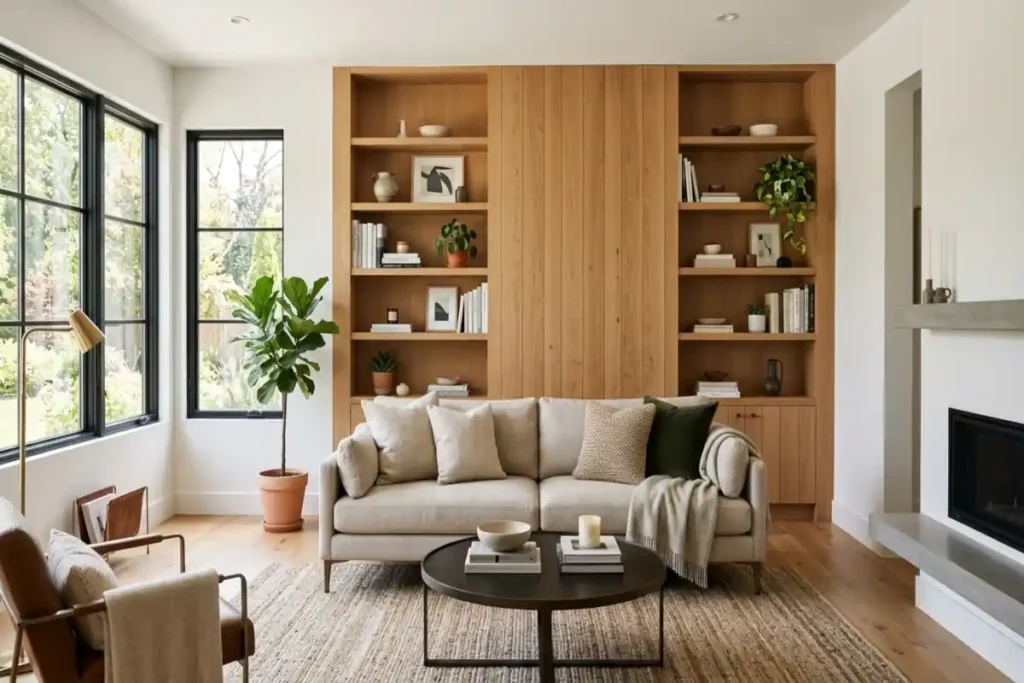
Combining wood with open shelving can make an accent wall more functional.
This works well in living rooms, home offices, and bedrooms.
You can use wood as the background while adding shelves for books, plants, framed photos, or simple decor.
Avoid overcrowding the shelves. The wall itself should still be visible.
12. Wood Frame Accent Wall
An accent wall wood frame design uses trim to create large decorative frames.
This approach can be simple enough for many DIY projects and works well when you want architectural detail without installing large amounts of wood.
You can leave the wall painted or add wallpaper inside selected frames.

13. Wood and Brick Accent Wall
Wood and brick can create a strong mix of warm natural materials.
The combination works best when one material remains visually dominant.
For example, use exposed or brick-style material on part of the wall and wood framing or slats on the other section.

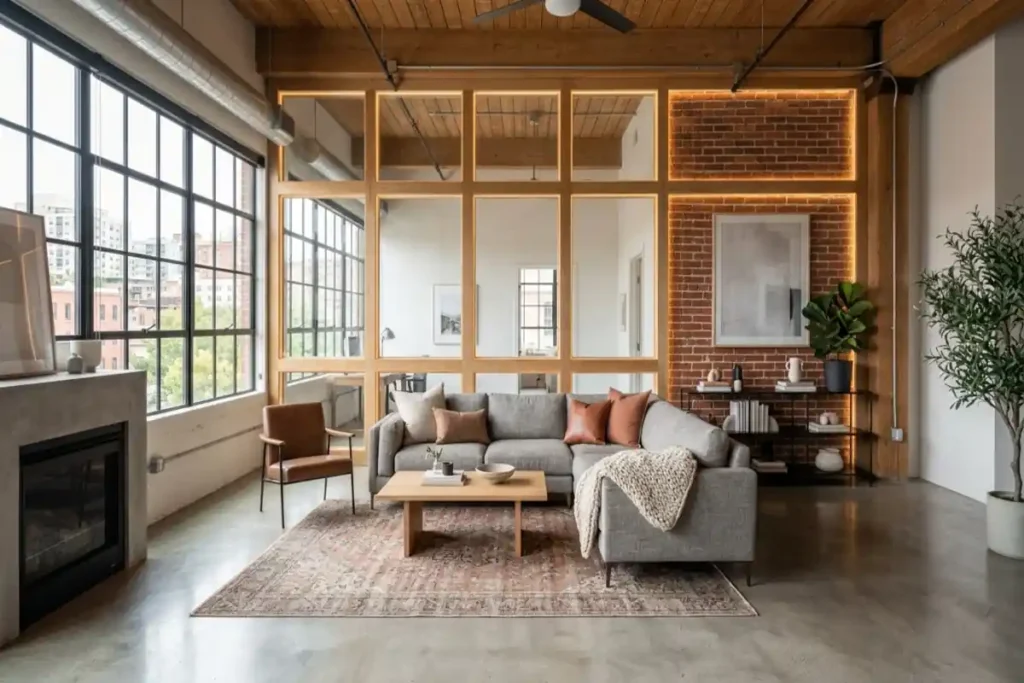
14. Wood and Glass Accent Wall
A wood-and-glass design can separate spaces while maintaining visual openness.
Wood framing combined with interior glass panels works well in offices, entryways, and open-plan homes.
This option often requires more precise installation than a basic DIY trim wall.
15. Wood Accent Wall in the Dining Room
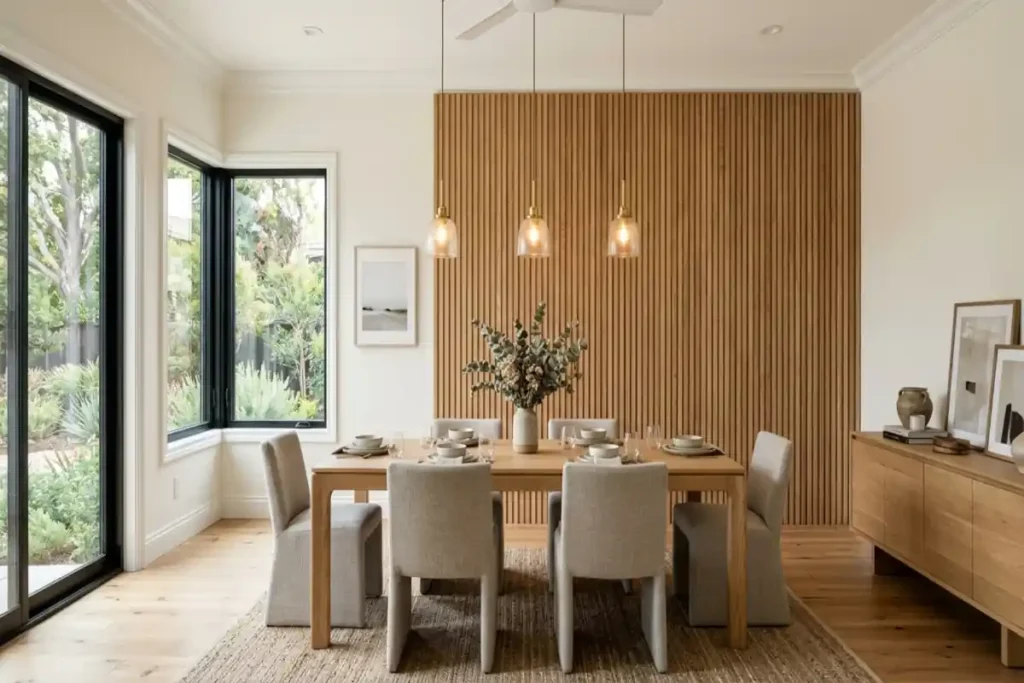
A dining room accent wall can make the eating area feel more defined.
Vertical wood slats, decorative panels, or a horizontal wood feature behind the dining table can work particularly well.
Keep the design proportional to the size of the table and room.
16. Wood Accent Wall for a Home Office
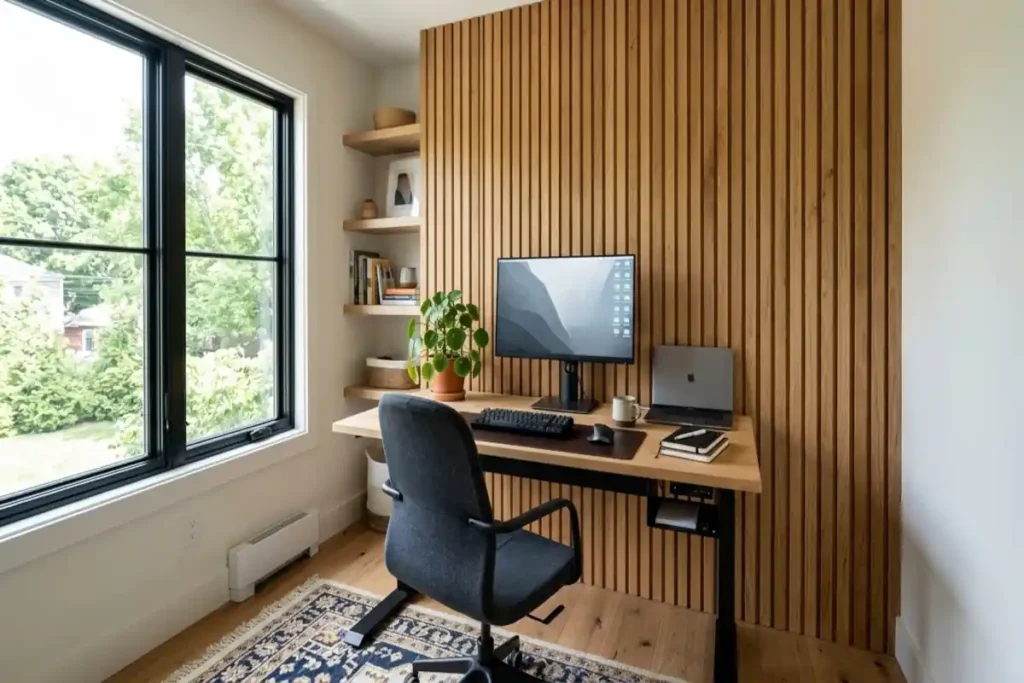
A wood feature wall behind a desk can make a home office feel more finished.
This is particularly useful when the wall appears in video calls.
Choose a pattern that looks interesting without becoming distracting on camera.
17. Wood Accent Wall in a Bathroom
Wood accent wall ideas for bathroom spaces require extra care because moisture is a major factor.
Not every wood product is suitable for a humid environment.
Use materials and finishes appropriate for bathrooms, and address ventilation problems before adding decorative wood.
In the USA, bathroom work involving electrical systems, plumbing, or major structural changes may also be subject to local requirements.

18. Wood Ceiling and Accent Wall Combination
Wood doesn’t have to stop at the wall.
A coordinated wood ceiling section can visually connect with an accent wall and create a more dramatic architectural feature.
This approach works best when the room has enough space and lighting to handle the additional visual weight.

19. Chevron Wood Accent Wall
A chevron wood accent wall uses angled pieces of wood arranged into repeating V-shaped patterns. Unlike herringbone, the pieces usually meet at a clean point, creating a sharper and more modern appearance.
This design works well behind a bed, sofa, or dining table.
Best for: Bedrooms and living rooms
Image file name: chevron-wood-accent-wall.webp
Alt text: Modern chevron wood accent wall in a stylish American living room
AI Image Prompt: Realistic professional interior photography of a modern American living room featuring a large chevron-pattern natural oak wood accent wall, warm neutral sofa, soft daylight through windows, realistic wood grain, contemporary home decor, clean architectural photography, no people, no text, no logos, 16:9.
20. Half-Wall Wood Accent Design
You don’t have to cover the entire wall with wood.
A half-wall wood accent can add texture while keeping the upper portion light and open. This is particularly useful in smaller bedrooms and dining rooms.
Best for: Small rooms and budget-friendly projects

21. Horizontal Wood Slat Accent Wall
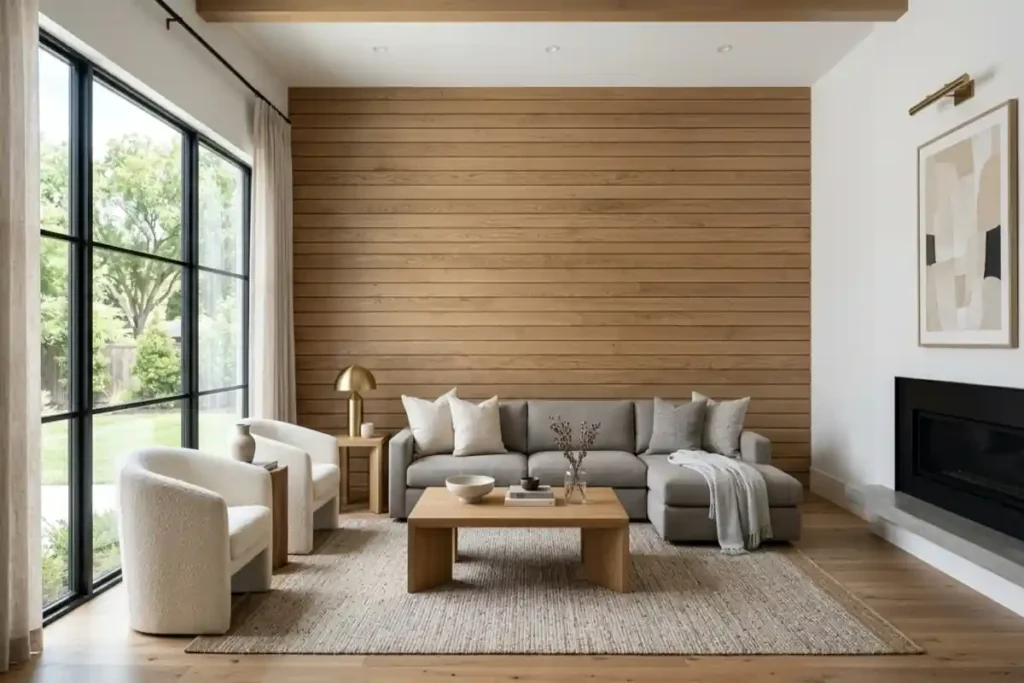
Vertical slats make a room feel taller, while horizontal wood slats can make a narrow wall appear visually wider.
Use clean, evenly spaced strips for a modern look.
22. Wood Accent Wall With Black Trim
Natural wood and black trim create a modern contrast.
Black framing can highlight individual wood panels and works especially well with contemporary furniture and metal lighting fixtures.

23. Wood Accent Wall With Metal Details
Adding small metal details can give a wood accent wall an industrial or modern appearance.
Use metal carefully. Too much wood and metal together can make a wall feel heavy.

24. Natural Wood Plank Accent Wall
Natural wood planks offer a simple and timeless design.
Planks can be installed vertically, horizontally, or diagonally depending on the style of the room.

25. Wood Accent Wall With a Fireplace
A fireplace wall is already a natural focal point.
Adding wood around selected sections can create a warmer, more finished appearance.
Keep heat and material-clearance requirements in mind when designing around a fireplace.

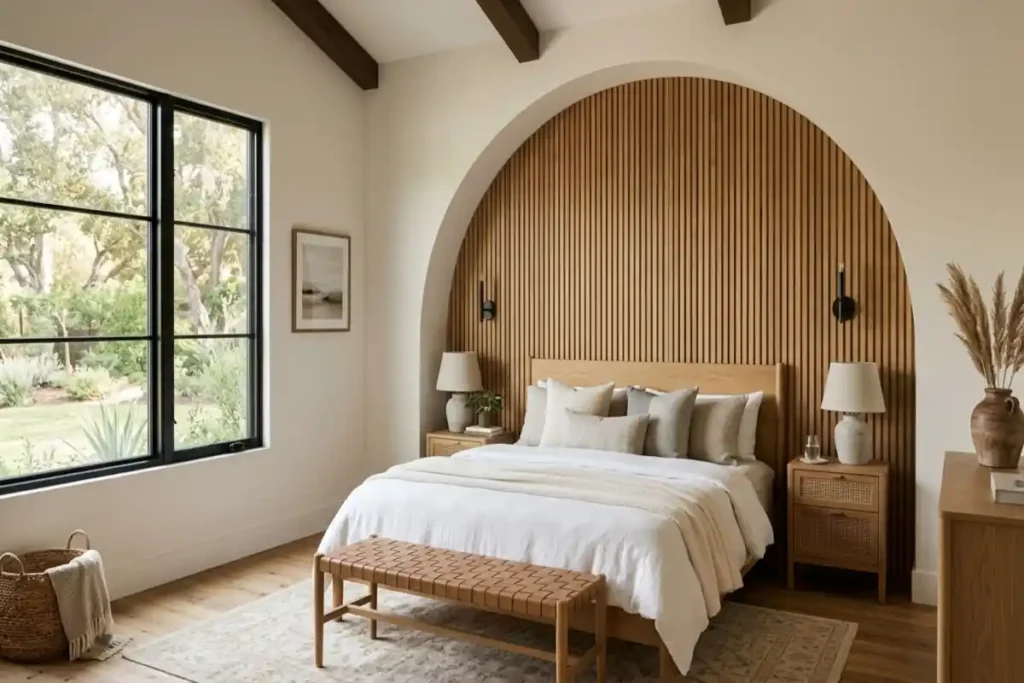
26. Arched Wood Accent Wall
An arch can soften the straight lines commonly found in wood panel designs.
You can create a painted arch behind wood slats or use wood to frame the arch itself.
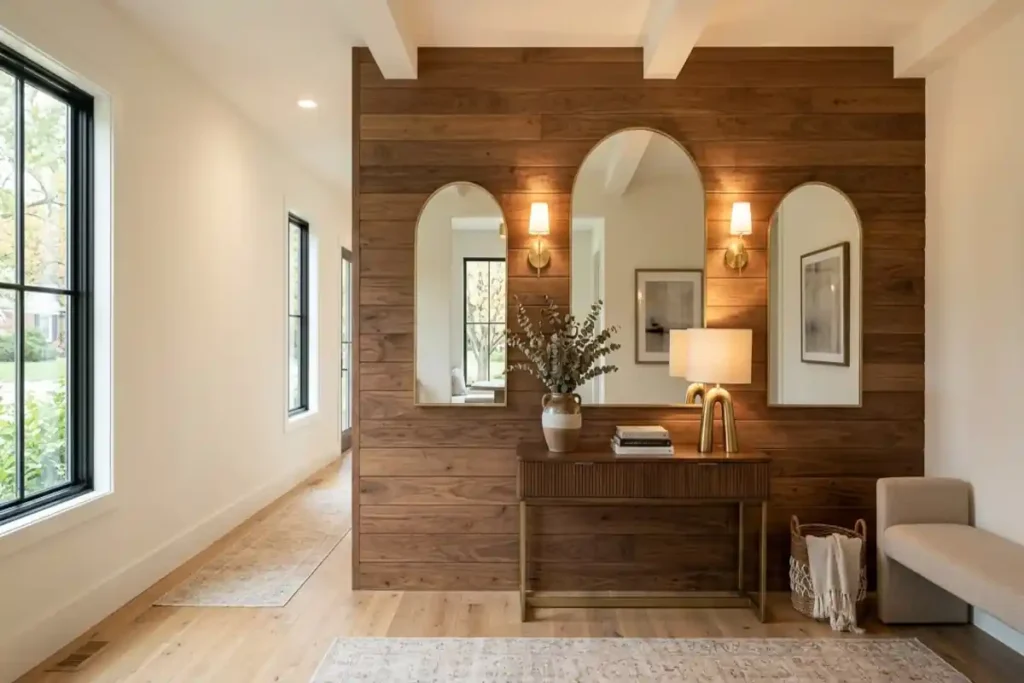
27. Wood Accent Wall With Mirrors
Mirrors can make a small room feel brighter and visually larger.
A combination of natural wood panels and carefully placed mirrors works particularly well in entryways and dining rooms.
28. Wood Accent Wall With Wallpaper Inserts
Wood trim can frame sections of wallpaper.
This creates a layered design without covering the entire wall with wood.
Choose wallpaper patterns that don’t compete with the wood grain.

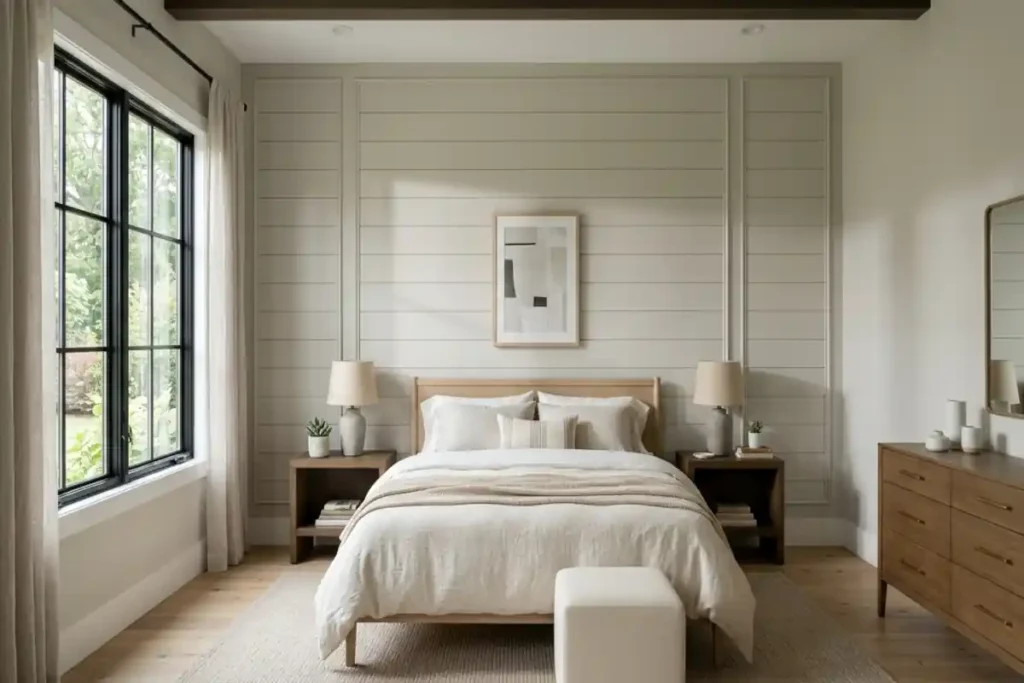
29. Painted Wood Accent Wall
You can install wood trim or panels and paint everything the same color.
This creates texture and shadows while keeping the design subtle.
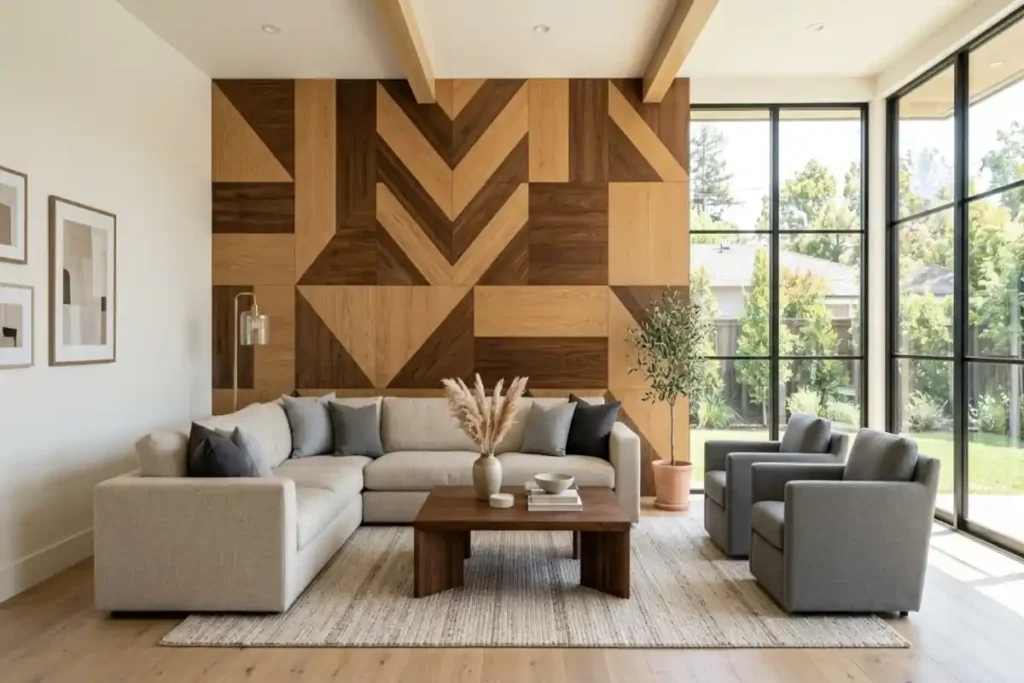
30. Two-Tone Wood Accent Wall
A two-tone design combines different wood shades.
For example, light oak and darker walnut can create contrast.
Use two complementary tones rather than several unrelated colors.
31. Wood Accent Wall With Resin Details
Resin can be used as a decorative feature alongside wood.
This is a more artistic option and is generally better suited to smaller statement sections than an entire wall.

32. Wood Accent Wall With LED Lighting
Hidden LED lighting can highlight the texture and depth of a wood wall.
Place lighting carefully so it enhances the design rather than creating harsh glare.
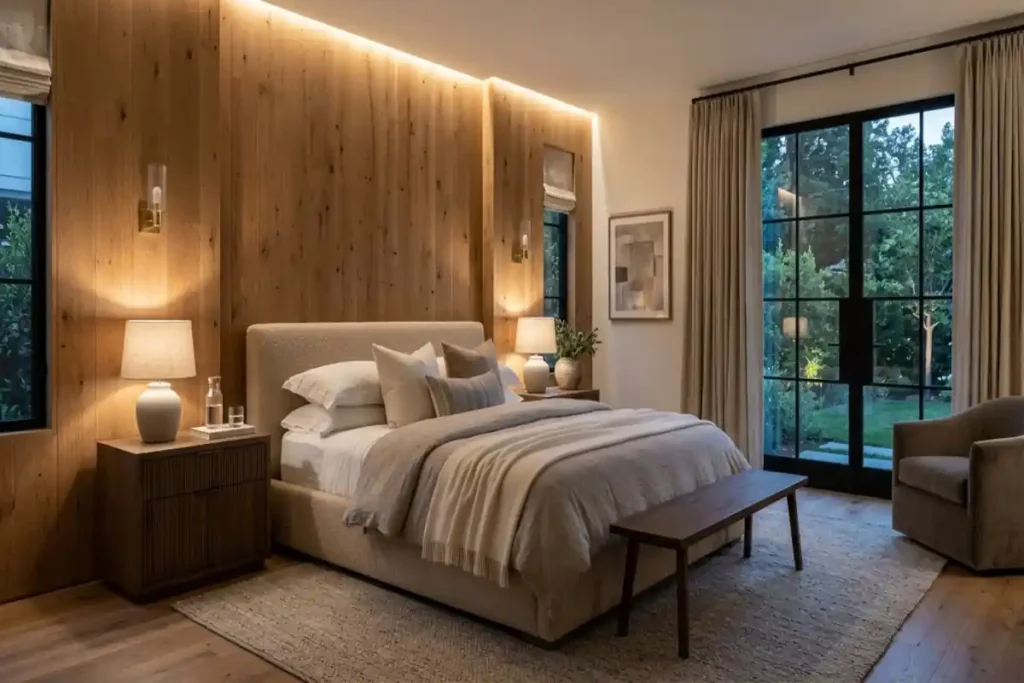
33. Narrow Wood Strip Accent Wall
Very thin strips create a more detailed pattern than wide slats.
This design works best on a smaller feature wall where the repeated lines won’t become overwhelming.
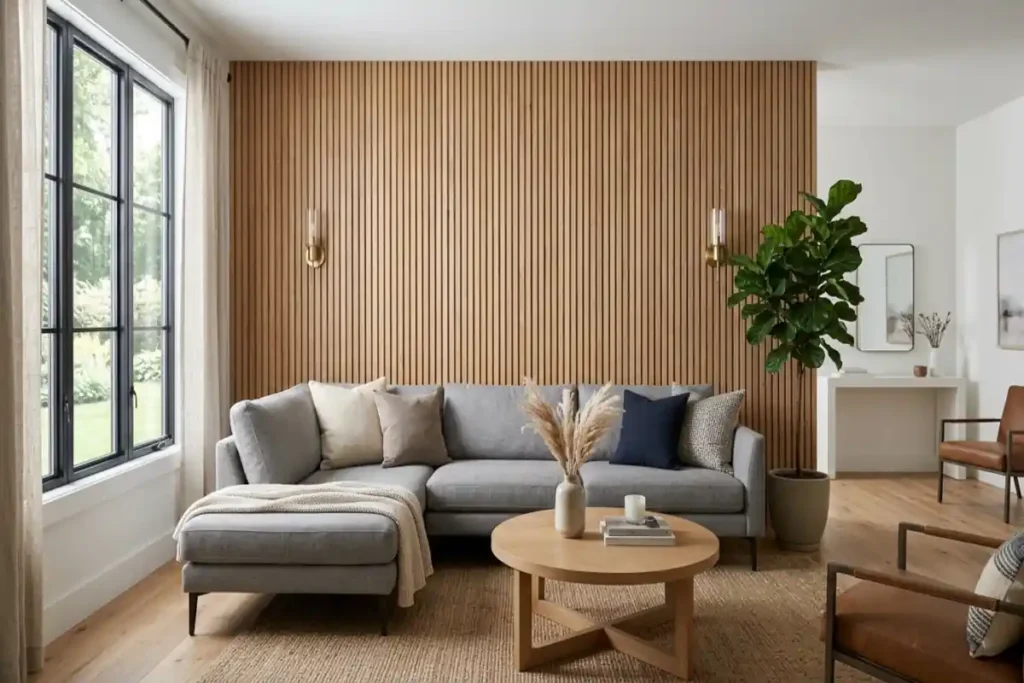
34. Wide Wood Panel Accent Wall
Wide panels create a simpler and more architectural appearance.
This is a good choice if you like modern minimalism.
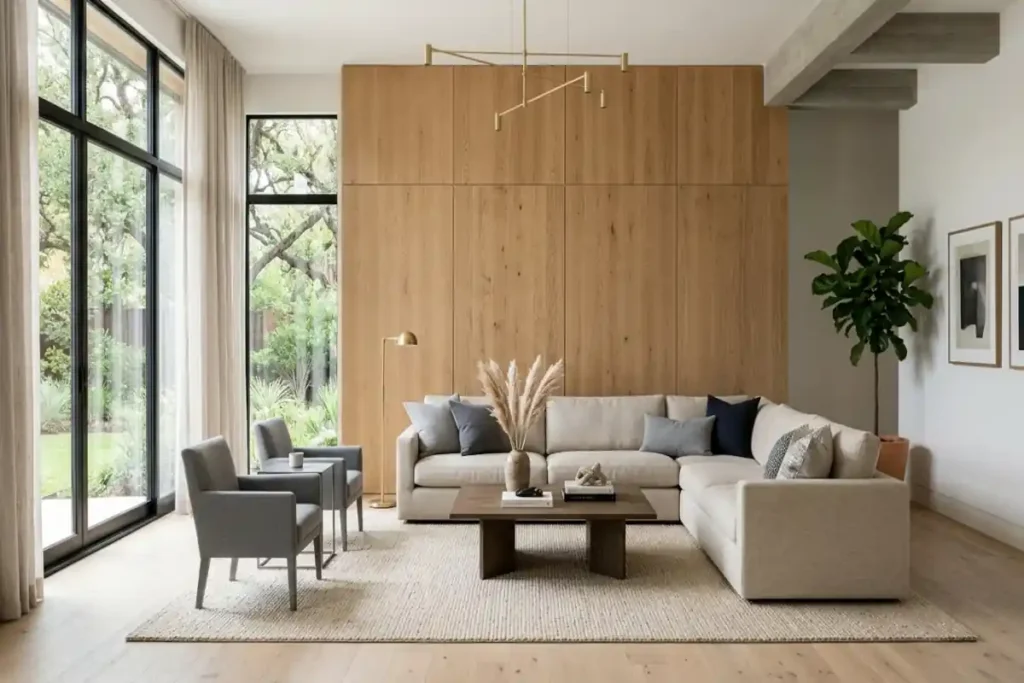
35. Wood Accent Wall Behind a Desk
A desk feature wall can define a work zone inside a larger room.
This is particularly useful for home offices and study spaces.
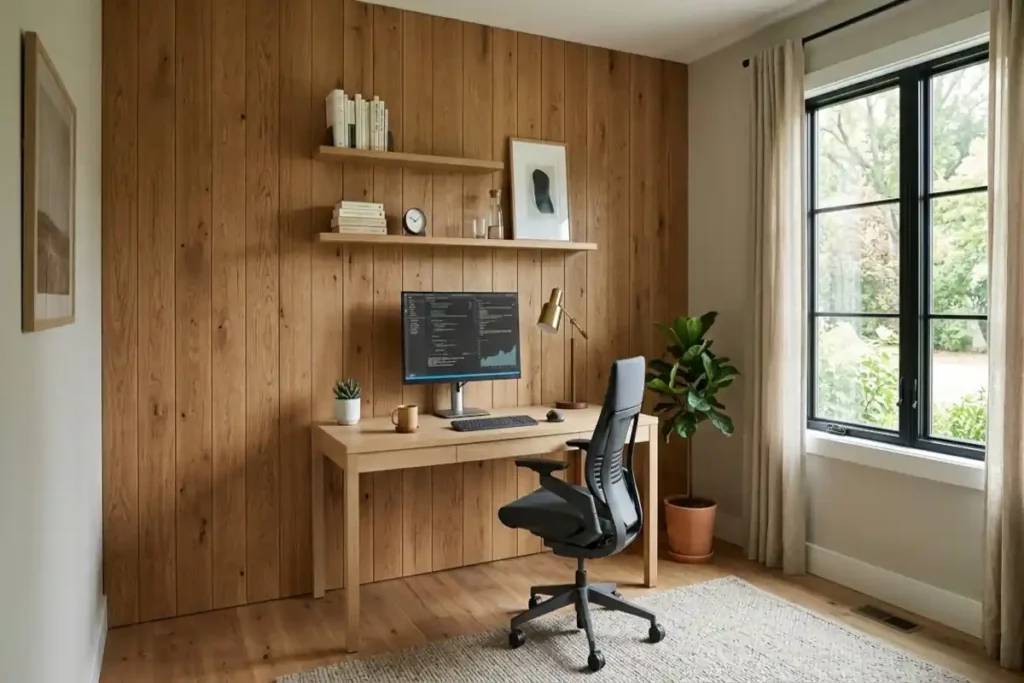
36. Wood Accent Wall With Floating Shelves
Floating shelves provide storage and decoration while allowing the wood texture to remain visible.
Use fewer, larger objects instead of filling every shelf.

37. Wood Accent Wall Around Windows
Wood trim can make windows feel like an intentional part of the feature wall.
This approach works best when the window placement is symmetrical or visually balanced.

38. Wood Accent Wall With Cabinets
Built-in cabinets can be combined with a wood feature wall.
This is useful for living rooms, dining rooms, and kitchens.
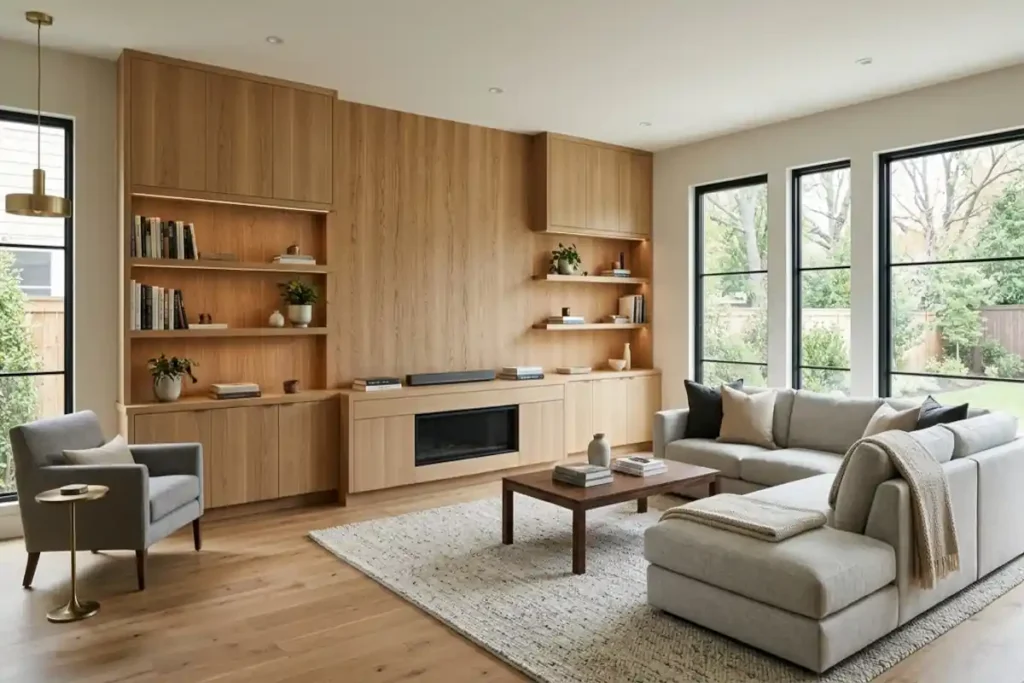
39. Kitchen Wood Accent Wall
Wood can add warmth to a kitchen that otherwise contains hard surfaces like stone, tile, and metal.
Use materials appropriate for the kitchen environment.

40. Wood Accent Wall in an Entryway
An entryway feature wall creates a strong first impression.
A narrow slat design or simple wood panels can add character without requiring a large amount of material.
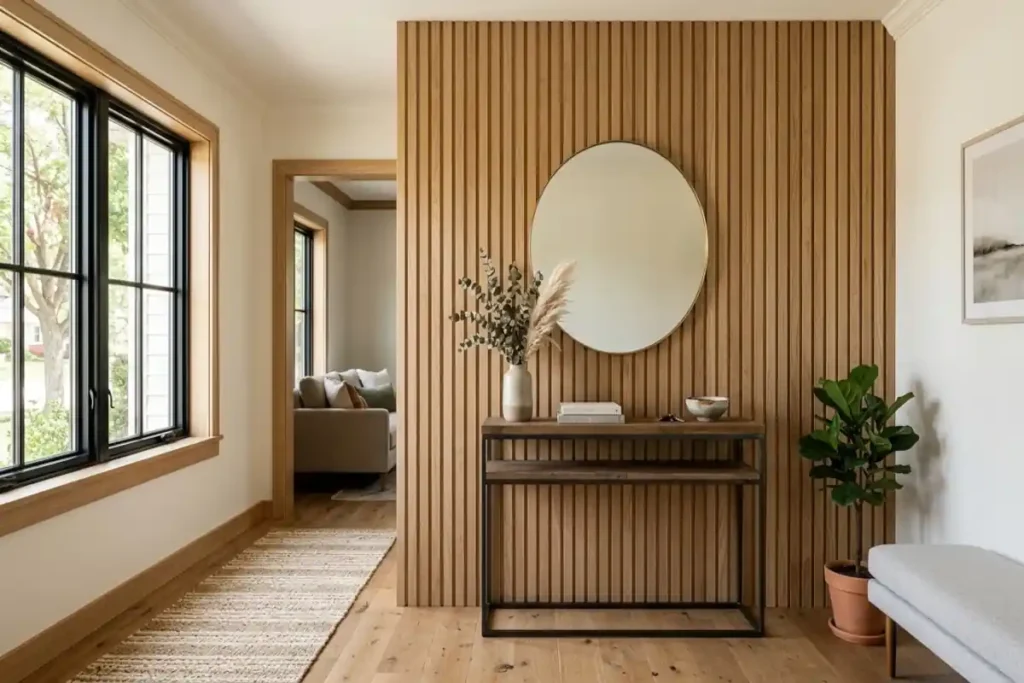
41. Diagonal Wood Accent Wall
Diagonal wood strips create movement and energy.
This works particularly well as a statement wall behind a bed or sofa.
Careful measuring is essential because small alignment errors become obvious.

42. Diamond Pattern Wood Accent Wall
Diamond patterns create a decorative and symmetrical design.
This option is better suited to homeowners who want a more detailed feature wall.

43. Hexagon Wood Accent Wall
Hexagonal wood pieces create a more unusual geometric design.
You can use the entire wall or create a smaller feature section.
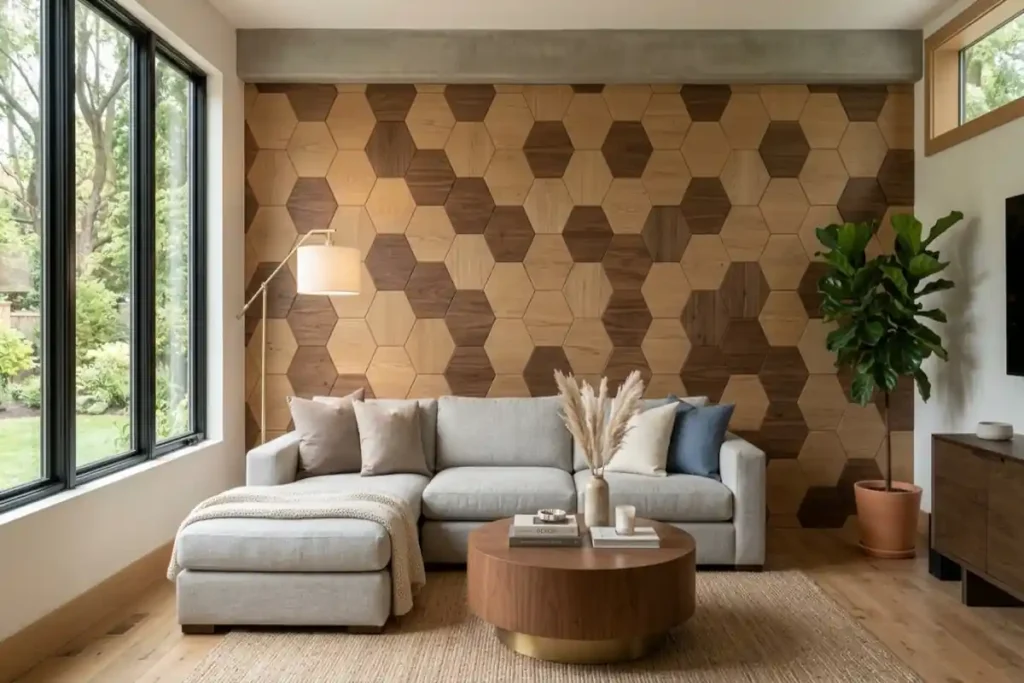
44. Mountain-Inspired Wood Accent Wall
A mountain pattern can be created using angled wood strips or painted sections.
This is especially popular for bedrooms, children’s rooms, and rustic-inspired spaces.
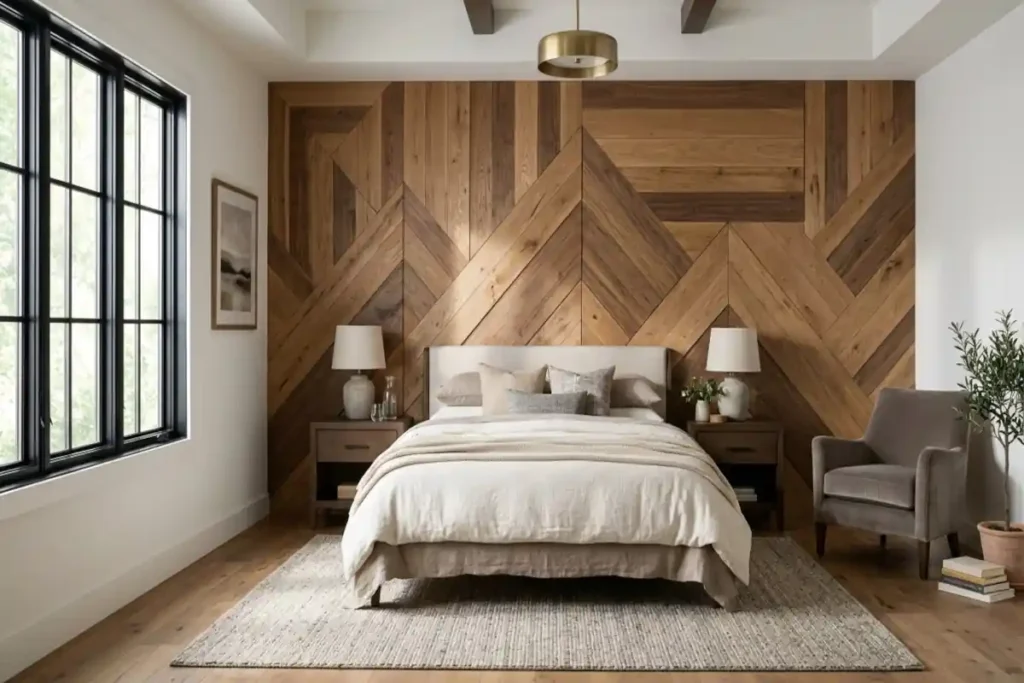
45. Wood Accent Wall With Artwork
A simple wood wall can become a background for carefully selected artwork.
Avoid using too many frames because the wood texture already adds visual interest.

46. Partial Wood Headboard Accent Wall
Instead of covering the entire wall, extend wood upward from behind the bed to create a built-in headboard effect.
This can be a practical and budget-friendly bedroom project.

47. Floor-to-Ceiling Wood Feature Wall
A floor-to-ceiling design creates the strongest visual impact.
This is a good option for a large wall with minimal interruptions.

48. Minimalist Single Wood Panel Accent
Sometimes one large wood panel is enough.
A minimalist design works particularly well when the room already contains strong furniture or artwork.

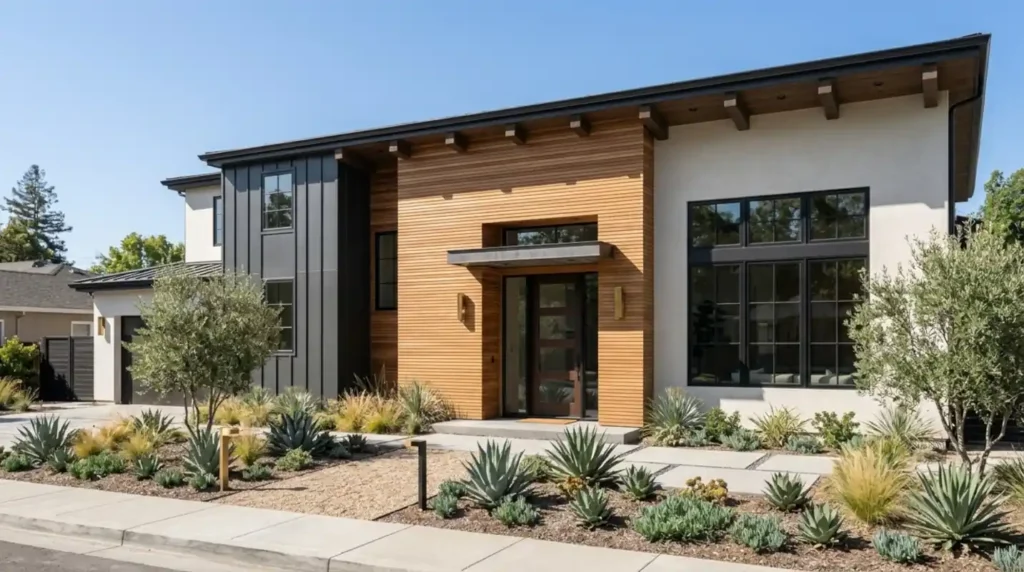
49. Exterior Wood Accent Wall
Wood can also be used as an exterior architectural accent.
Exterior projects require weather-resistant materials and appropriate finishes.
For homes in California and other parts of the USA, sun exposure and local climate should be considered.
50. Mixed Wood and Tile Accent Wall
Wood and tile can work together in kitchens, bathrooms, and fireplaces.
The key is keeping the color palette coordinated.

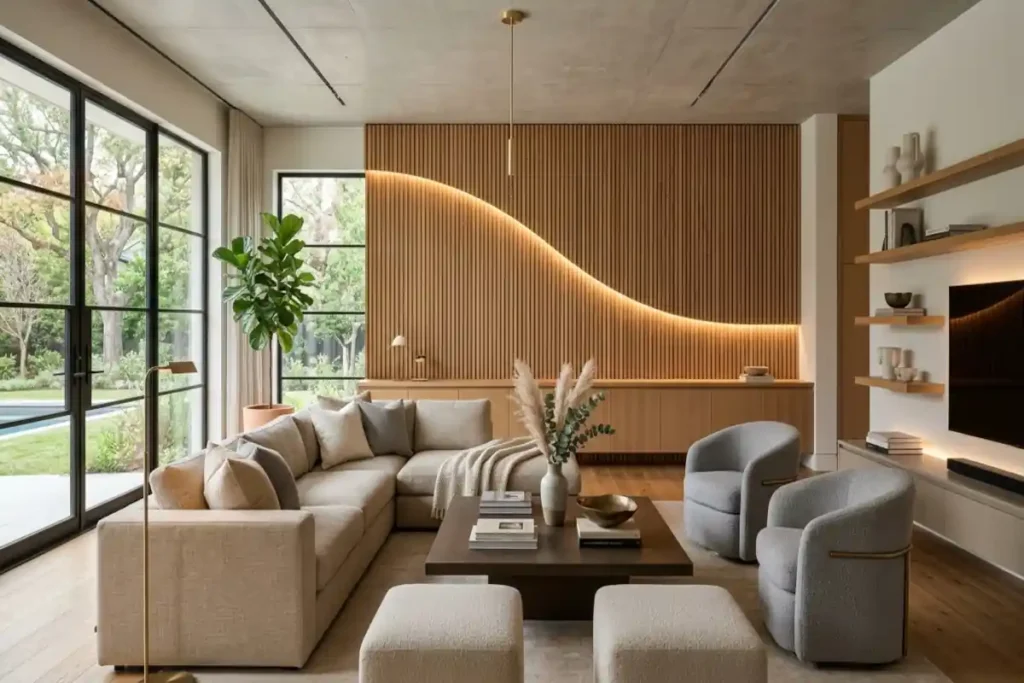
51. Curved Wood Slat Accent Wall
Curved or gently rounded wood slats can create a softer alternative to straight vertical lines.
This works well in modern luxury interiors.
52. Wood Accent Wall With Hidden Door
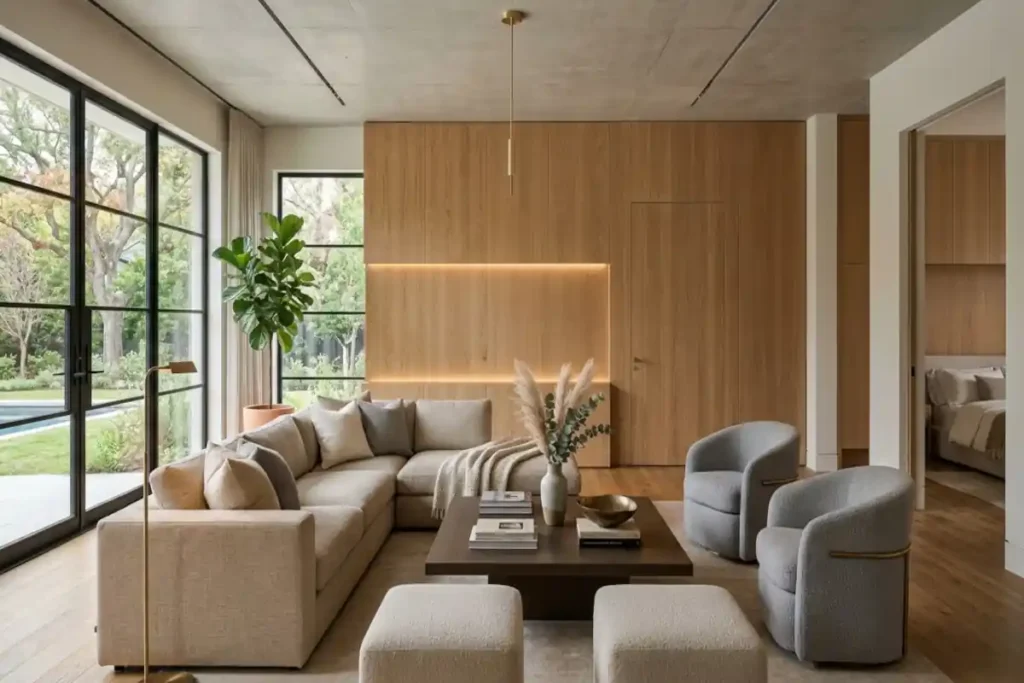
A wood feature wall can conceal a door by continuing the same panel pattern across it.
This creates a seamless architectural appearance.
Professional installation may be needed for accurate alignment.
Best Wood Accent Wall Ideas by Room
| Room | Recommended Design |
| Bedroom | Vertical slats, headboard wall, trim frames |
| Living Room | TV wall, wide panels, slats |
| Bathroom | Moisture-conscious wood feature |
| Kitchen | Wood and cabinets, wood and tile |
| Dining Room | Full wall panels, trim grid |
| Home Office | Slats behind desk, shelving |
| Entryway | Vertical slats, narrow panels |
| Exterior | Weather-appropriate wood accents |
How to Do an Accent Wall With Wood
The basic process for a wood accent wall is straightforward, but accurate measuring makes a major difference.
Step 1: Choose the Right Wall
Look for a wall that already has a natural purpose as a focal point.
Good choices include:
- The wall behind your bed
- The wall behind a sofa
- A dining room wall
- The wall behind a desk
- A TV wall
- An entryway feature wall
Step 2: Measure and Plan
Measure the height and width in inches or feet.
Sketch the pattern before buying materials. For slat walls and geometric designs, calculate spacing carefully.
Step 3: Choose Your Material
Common options include:
- Solid wood
- MDF
- Plywood
- Veneer panels
- Pre-made decorative wall panels
The cheapest option isn’t always the best. Consider durability, finish quality, moisture exposure, and how easy the material is to cut.
Step 4: Find Wall Studs and Check the Surface
Locate studs when your installation method requires secure fastening.
Also check for:
- Uneven drywall
- Moisture damage
- Electrical outlets
- Switches
- Existing cables
Step 5: Install and Finish
Use the appropriate adhesive or fasteners for the material and wall.
Then finish the wood with paint, stain, or a protective coating if needed.
DIY Wood Accent Wall Ideas: Which Design Is Easiest?
For beginners, simple trim patterns are usually easier than complex herringbone or geometric installations.
| Design | DIY Difficulty | Cost Level | Best Use |
| Simple wood trim | Easy | Low to moderate | Bedrooms and hallways |
| Board and batten | Easy to moderate | Moderate | Most rooms |
| Vertical slats | Moderate | Moderate | Living rooms and bedrooms |
| Geometric strips | Moderate to difficult | Moderate | Feature walls |
| Herringbone | Difficult | Moderate to high | Statement walls |
| Wood and glass | Difficult | High | Offices and open spaces |
Costs can vary significantly based on material quality, wall size, tools, and whether professional installation is required.
What to Do With an Accent Wall
An accent wall should support the room rather than compete with everything in it.
You can use it to:
- Frame a bed or sofa
- Highlight artwork
- Create a TV feature wall
- Define an open-plan area
- Add texture to a plain room
- Create a stronger background for shelves
The best accent walls usually have a clear purpose.
Are Wood Accent Walls Still in Style?
Yes, wood accent walls are still in style, although the most popular designs have changed over time.
Modern interiors often use:
- Clean vertical slats
- Natural oak tones
- Minimal geometric patterns
- Wide wood panels
- Warm neutral colors
What tends to age faster is an overly complicated design that doesn’t fit the rest of the home.
Instead of copying a trend exactly, choose a design that matches your architecture, furniture, and long-term preferences.
Should an Accent Wall Be Darker or Lighter?
An accent wall doesn’t have to be darker.
A darker wall creates stronger contrast, while a lighter wood design can add texture without making the room feel smaller.
Natural wood itself can act as the accent. You don’t always need a bold paint color behind it.
California and USA Considerations
For readers in California and across the USA, the best wood choice may depend on climate, indoor humidity, and the room where the material will be installed.
For example:
- Bathrooms need moisture-conscious materials and good ventilation.
- Exterior wood accent designs face weather and UV exposure.
- Areas with strong sunlight may experience fading over time.
- Major remodeling work may require compliance with applicable local building rules.
If your project involves electrical wiring, structural changes, plumbing, or significant construction, consult the appropriate licensed professional and check local requirements before starting.
Common Mistakes to Avoid
Choosing a Wall Without a Focal Purpose
Not every empty wall needs to become an accent wall.
Choose a wall connected to an important feature in the room.
Using Too Many Different Materials
Wood, brick, metal, tile, mirrors, and bold colors can quickly become overwhelming when all used together.
Usually, one or two major materials are enough.
Ignoring Lighting
Wood looks different in direct sunlight, warm artificial light, and cool LED lighting.
Test samples in your actual room before completing the entire wall.
Forgetting Outlets and Switches
Plan around electrical features before cutting materials.
Making the Pattern Too Busy
A common mistake we see is choosing a highly detailed design for a small room already filled with furniture and decor.
Sometimes a simple vertical or rectangular pattern looks better.
Conclusion: Choosing the Best Accent Walls Ideas With Wood
The best accent walls ideas with wood are the ones that fit your room, budget, and personal style.
Vertical slats work beautifully for modern interiors. Wood trim grids offer an affordable DIY option. Herringbone and geometric patterns make a stronger visual statement, while natural wood panels can add warmth without complicated designs.
Before starting, measure carefully, test your materials, and think about what you want the wall to highlight. A well-planned wood accent wall should feel like part of the home, not something added just to follow a trend.
Summary
52 Accent walls ideas with wood range from simple trim patterns and board-and-batten designs to vertical slats, reclaimed wood, and complex geometric layouts. The best choice depends on your room size, lighting, budget, and DIY experience. For homes in California and throughout the USA, also consider moisture, sunlight, and applicable local requirements when selecting materials.
Frequently Asked Questions
What is the easiest wood accent wall to make?
A simple wood trim or board-and-batten design is often the easiest option for beginners. It requires less complex cutting than herringbone or geometric patterns. If you’re trying DIY accent wall ideas with wood, start with a simple repeated pattern and carefully measure before installation.
Are wood accent walls still in style in 2026?
Yes, wood accent walls remain popular, especially designs using natural wood tones, vertical slats, clean panels, and simple architectural trim. The most timeless wood accent wall ideas usually focus on quality materials and balanced design rather than an overly complicated pattern.
What wood is best for an interior accent wall?
The best material depends on your budget and location. Solid wood offers natural character, while MDF and plywood can be more affordable for painted trim designs. For bathrooms or humid spaces, choose materials and finishes appropriate for moisture exposure.
Where should I put an accent wall in my living room?
The wall behind the sofa or TV is often the best choice for an accent wall ideas living room wood project. Choose a wall that naturally draws attention when you enter the room. Avoid creating multiple competing accent walls in one small space.
Should a bedroom accent wall be behind the bed?
Usually, yes. The wall behind the bed naturally works as a focal point and can visually replace or enhance a traditional headboard. Bedroom accent wall ideas with wood include vertical slats, trim frames, natural panels, and partial wood features.
Can I put a wood accent wall in a bathroom?
Yes, but material selection is important. Bathrooms experience humidity and moisture, so not every wood product is suitable. Use appropriate finishes, maintain proper ventilation, and address existing moisture problems before installing a permanent wood accent wall.
Are wood accent walls a good idea for California homes?
Wood accent walls can work well in California homes, but indoor sunlight, room conditions, and local project requirements should be considered. Natural wood may change appearance over time when exposed to strong sunlight, while bathrooms and exterior applications require additional moisture and weather protection.
Do accent walls have to be darker than the other walls?
No. An accent wall can be darker, lighter, textured, or made from a different material. Natural wood itself creates contrast through grain and texture, so accent walls with wood design don’t necessarily require a dark paint color.