

A plain wall does not have to stay boring. Sometimes, adding the right color, texture, or decorative detail to a single wall is enough to give an entire room a fresh new look. That is exactly why modern accent walls have become an attractive feature in contemporary home design.
Today’s accent walls are about more than painting one wall a different color. Homeowners are exploring natural wood panels, textured finishes, geometric patterns, decorative molding, and elegant neutral shades to create spaces that feel comfortable and visually interesting.
Whether you want to refresh your living room, create a relaxing bedroom, or give your home office a more polished appearance, an accent wall can help you achieve your goal without redesigning the entire space.
The best approach is to choose a design that complements your furniture, lighting, room size, and personal style. Here are some beautiful modern accent wall ideas, along with practical tips to help you choose the right one for your home.
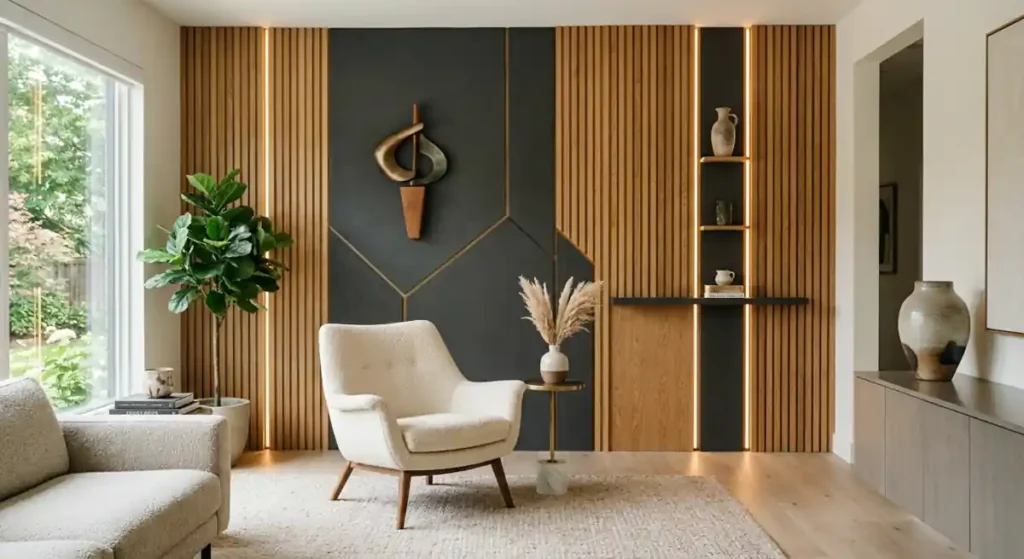
Table of Contents
What Makes an Accent Wall Modern?
A modern accent wall is a specially designed wall that stands out from the surrounding surfaces through color, texture, materials, patterns, or architectural details.
Unlike traditional feature walls that often depend on strong color contrasts, contemporary designs generally focus on balance and coordination. Natural finishes, clean lines, subtle patterns, and thoughtful lighting are commonly used to create a more refined appearance.
For example, a living room might feature a warm oak slat wall behind a cream sofa. A bedroom could have a muted sage-green wall behind the headboard, while a home office might use a simple geometric pattern in beige and terracotta.
These designs create a focal point without making the entire room feel overly decorated.
10 Modern Accent Walls Ideas for Every Home
The right accent wall can add personality to almost any room. Here are ten designs worth considering.
1. Natural Wood Slat Accent Wall
Wood slat walls are an excellent option for homeowners who want to introduce natural warmth and texture into their interiors.
Vertical wooden strips create a clean architectural pattern and can make a room appear taller. Light oak creates a soft, Scandinavian-inspired look, while walnut offers a deeper and richer appearance.
This design works particularly well behind a living room sofa, television, or bedroom headboard.
Best for: Living rooms, bedrooms, home offices, and entertainment areas.
Decorating tip: Combine natural wood slats with cream upholstery, warm lighting, and neutral accessories to create a coordinated interior.

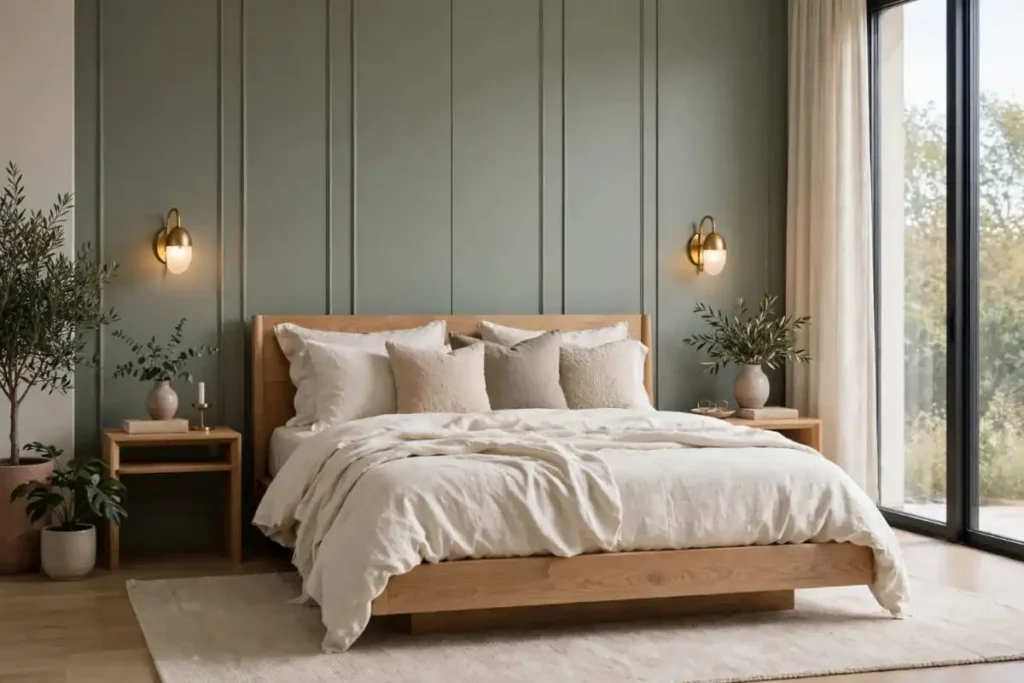
2. Sage Green Accent Wall
Sage green is a versatile color for creating a calm and inviting atmosphere. Its muted appearance works beautifully with natural materials and neutral furniture.
A sage-green accent wall behind a bed or sofa can introduce color without making the room feel too dramatic.
Pair it with cream, beige, light oak, white, or soft brown for a balanced design.
Best for: Bedrooms, living rooms, reading corners, and home offices.
Decorating tip: Add natural plants and linen fabrics to strengthen the connection with nature.
3. Textured Lime Wash Accent Wall
If you prefer subtle elegance, a lime wash or plaster-inspired accent wall may be the right choice.
These finishes create soft variations in color and texture, giving a wall more depth than ordinary flat paint. Warm beige, off-white, and light taupe are especially useful for neutral interiors.
A textured wall can become a beautiful background for simple artwork, decorative lighting, or comfortable furniture.
Best for: Living rooms, bedrooms, and minimalist interiors.
Decorating tip: Use soft side lighting to highlight the natural texture of the finish.

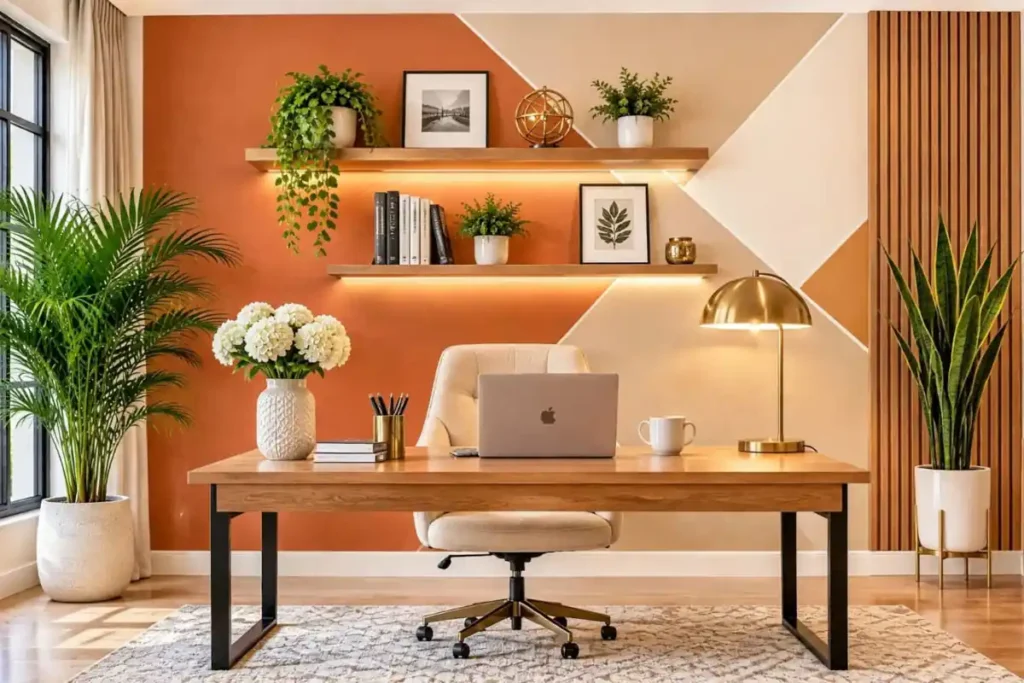
4. Geometric Accent Wall
Geometric designs use shapes, angles, and lines to create a distinctive visual feature. You can achieve this look with painted sections, decorative trim, or a combination of complementary colors.
For a modern appearance, consider muted terracotta, warm beige, cream, or charcoal. Simple shapes often look more balanced than complicated patterns.
Best for: Home offices, bedrooms, creative spaces, and children’s rooms.
Decorating tip: Plan the pattern carefully before painting. Painter’s tape and accurate measurements help create clean edges.
5. Board-and-Batten Accent Wall
Board-and-batten walls add architectural detail through evenly spaced vertical boards and horizontal trim.
Although this style has traditional roots, it can look very contemporary when designed with clean lines and a coordinated color palette.
Painting the entire wall and trim in the same shade creates a subtle appearance. Warm white, muted green, taupe, and charcoal are useful choices.
Best for: Bedrooms, hallways, dining rooms, and entryways.
Decorating tip: Keep panel spacing consistent to achieve a professional-looking finish.

6. Modern Wallpaper Accent Wall
Wallpaper remains a practical way to introduce patterns and decorative details without changing the entire room.
Modern options include botanical prints, abstract artwork, subtle geometric designs, and textured wallpaper that resembles natural materials.
A patterned wall can work particularly well behind a bed or in a dining area where it can become the main decorative feature.
Best for: Bedrooms, powder rooms, dining rooms, and living rooms.
Decorating tip: If your wallpaper has a bold pattern, keep the nearby furniture and accessories relatively simple.

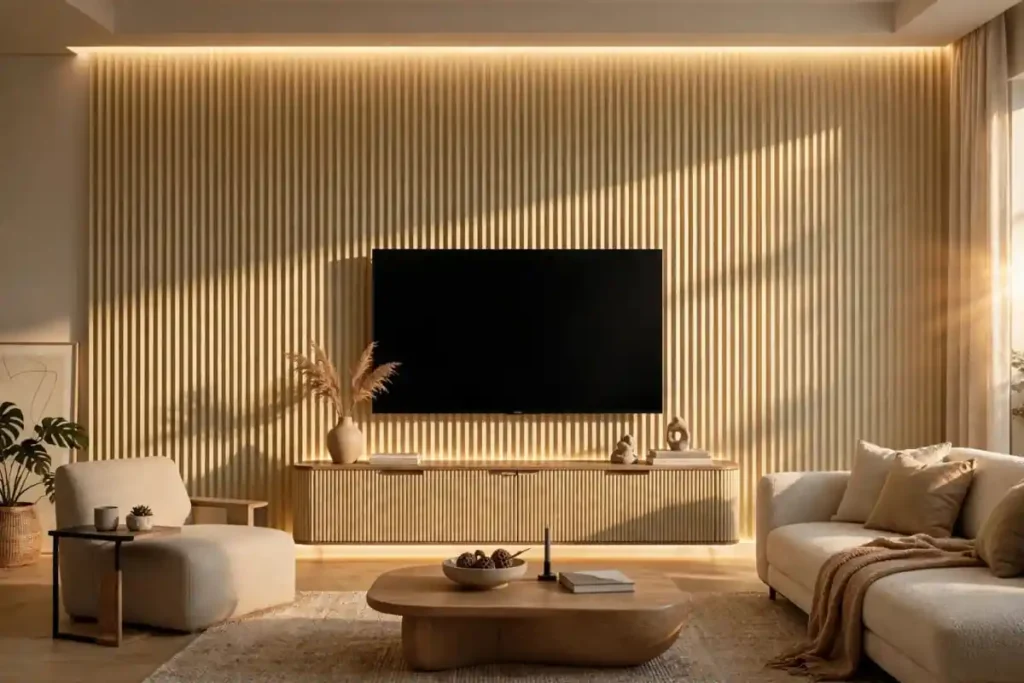
7. Fluted Wall Panel Accent Wall
Fluted panels feature repeated grooves that create a three-dimensional surface. They add visual depth while maintaining a clean and contemporary appearance.
Depending on the finish, fluted panels can look warm, luxurious, or minimalist. Natural wood, painted beige, and soft gray are popular design directions.
They are especially attractive behind televisions, beds, and decorative consoles.
Best for: Living rooms, bedrooms, and entryways.
Decorating tip: Use lighting from the side to emphasize the grooves and create attractive shadows.
8. Two-Tone Painted Accent Wall
A two-tone wall combines two complementary shades on a single surface. You might use a deeper color on the lower half and a lighter shade above it.
Another option is to create a simple horizontal or vertical division that works with the furniture arrangement.
This design is relatively affordable and can be completed as a DIY project with proper preparation.
Best for: Bedrooms, dining rooms, hallways, and children’s rooms.
Decorating tip: Use a level and painter’s tape to make sure the dividing line is straight.

9. Stone or Marble-Look Accent Wall
Stone and marble-look surfaces can create a dramatic focal point in contemporary interiors.
Natural stone, porcelain slabs, and decorative wall panels offer different appearances and installation requirements. A marble-look feature wall can create a refined television backdrop, while stone around a fireplace adds texture and character.
Best for: Living rooms, fireplace areas, and selected dining spaces.
Decorating tip: Let the stone or marble finish stand out by avoiding too many competing patterns nearby.

10. Built-In Shelving Accent Wall
An accent wall does not have to be purely decorative. Built-in shelving combines visual interest with useful storage.
You can display books, small plants, framed photographs, and decorative objects while creating a more organized appearance.
For a contemporary design, choose simple shelving, coordinated finishes, and subtle integrated lighting.
Best for: Living rooms, home offices, family rooms, and reading areas.
Decorating tip: Leave some open space between decorative objects. Overfilling shelves can make the entire wall look cluttered.
Best Modern Accent Wall Materials Compared
Choosing the right material is just as important as choosing the design. Each option offers a different appearance, maintenance requirement, and installation process.
| Material | Appearance | Best room | Project difficulty |
| Interior paint | Simple and clean | Any room | Easy |
| Natural wood slats | Warm and textured | Living room or bedroom | Moderate |
| Wallpaper | Patterned and decorative | Bedroom or dining room | Easy to moderate |
| Limewash finish | Soft and textured | Living room or bedroom | Moderate |
| Board-and-batten | Architectural and structured | Hallway or bedroom | Moderate |
| Fluted panels | Contemporary and dimensional | TV wall or bedroom | Moderate |
| Stone panels | Bold and luxurious | Fireplace or living room | Advanced |
Installation difficulty depends on wall condition, material quality, tools, and experience. Heavy stone panels and complex built-in features may require professional installation.
Best Colors for Modern Accent Walls
The right color can make a significant difference in how your room looks and feels. Instead of choosing a shade in isolation, consider your existing flooring, furniture, curtains, and natural light.
| Accent wall color | Overall feel | Ideal combinations |
| Sage green | Calm and natural | Cream, oak, beige |
| Forest green | Rich and dramatic | Walnut, brass, warm white |
| Warm beige | Soft and welcoming | White, linen, natural wood |
| Navy blue | Elegant and sophisticated | Gray, white, light oak |
| Terracotta | Warm and earthy | Cream, tan, brown |
| Charcoal | Contemporary and bold | Light wood, beige, white |
| Soft taupe | Relaxed and understated | Cream, gray, oak |
Before painting, apply a small sample to the wall and observe it at different times of day. Natural light, ceiling lights, and nearby colors can all affect how a shade appears.
Modern Accent Wall Ideas for Different Rooms
Not every room needs the same accent wall treatment. The design should complement the room’s purpose and existing layout.
Living Room Accent Walls
The living room is an ideal place to create a strong focal point. Consider natural wood slats behind the television, a textured beige wall behind the sofa, or a deep green wall around a fireplace.
Keep the seating arrangement in mind so the accent wall feels connected to the room.
Bedroom Accent Walls
The wall behind the bed is usually a natural choice. Sage green paint, warm beige plaster, vertical wood panels, and soft wallpaper can all create a relaxing backdrop.
Combine the wall with comfortable bedding, simple bedside furniture, and warm lighting.
Dining Room Accent Walls
Decorative molding, botanical wallpaper, or a muted earthy color can give a dining room more personality.
Choose a design that works with your dining table, chairs, and light fixture.
Home Office Accent Walls
A modern home office can benefit from a simple geometric design, muted green paint, or built-in shelving.
Choose a background that looks organized and comfortable, especially if you regularly attend online meetings.
How to Choose the Right Accent Wall for Your Home
Before starting your project, take time to evaluate the room. These practical steps can help you avoid unnecessary changes.
- Find the natural focal point: Look for a wall behind the bed, sofa, fireplace, or another important feature.
- Consider the room size: Large patterns and heavy materials may overwhelm smaller spaces.
- Coordinate the colors: Match your accent wall with existing flooring, furniture, and decorative accessories.
- Choose the right material: Consider your budget, maintenance needs, and installation experience.
- Think about lighting: Check how natural and artificial light affect the wall’s color and texture.
- Plan your budget: Include preparation, materials, tools, installation, and finishing costs.
A successful accent wall should look like part of the original design rather than an unrelated decorative addition.
Common Accent Wall Mistakes to Avoid
Even an attractive material can look disappointing when it is not used correctly. Avoid these common mistakes:
- Choosing a random wall: Select a wall that has a clear purpose in the room.
- Mixing too many patterns: Busy wallpaper and heavily patterned furniture can compete for attention.
- Ignoring lighting: Always test colors under the lighting conditions of your actual room.
- Overdecorating: Too many accessories can hide the wall’s main design.
- Using unsuitable materials: Consider moisture, cleaning, durability, and wall condition before installation.
- Following trends blindly: Choose a style that complements your home and personal preferences.
Frequently Asked Questions About Modern Accent Walls
1. What is the most popular modern accent wall design?
Wood slat walls, textured plaster finishes, minimalist painted walls, and decorative paneling are versatile choices for contemporary homes. The best option depends on your room and decorating style.
2. Are modern accent walls still in style?
Yes. Accent walls remain a useful interior design feature. Current designs often emphasize natural materials, coordinated colors, subtle textures, and clean architectural details.
3. What color is best for a modern accent wall?
Sage green, forest green, warm beige, navy blue, terracotta, and charcoal are all attractive options. Consider your room’s lighting and existing decor before making a choice.
4. Which wall should be the accent wall in a living room?
The wall behind the sofa, fireplace, or television is often a good option. Choose the wall that naturally attracts attention and complements the furniture arrangement.
5. Are wood slat accent walls still popular?
Yes. Wood slat walls add warmth, texture, and architectural detail. They work particularly well in modern living rooms, bedrooms, and entertainment spaces.
6. Do accent walls make small rooms look smaller?
Not necessarily. The result depends on the color, pattern, texture, and lighting. A carefully chosen design can add character without overwhelming a small room.
7. How much does a modern accent wall cost?
The cost varies according to wall dimensions, material, preparation, and labor. A simple painted wall generally costs less than custom wood slats, stone panels, or built-in shelving. Get local estimates before starting a larger installation.
8. Can I create a modern accent wall myself?
Yes. Painting, removable wallpaper, and simple decorative trim projects can be suitable for DIY homeowners. More complex installations involving electrical fixtures, heavy materials, or custom cabinetry may require a professional.
9. What is the difference between an accent wall and a feature wall?
The terms are commonly used interchangeably. Both describe a wall that stands out from the surrounding surfaces. Some designers use feature wall for more elaborate treatments involving architectural details or special materials.
10. How can I make an accent wall look timeless?
Choose quality materials, balanced colors, simple patterns, and a design that complements your home’s architecture. Avoid relying entirely on short-lived trends.
Final Thoughts
Modern accent walls offer an easy way to bring more character, warmth, and visual interest into your home. Whether you prefer natural wood slats, textured beige finishes, sage-green paint, geometric patterns, or decorative wall panels, there are plenty of options to explore.
The secret is choosing a design that works with your existing furniture, lighting, and room layout. You do not need to cover every wall with decorative materials or spend a large amount of money to create a beautiful result.
Start with one wall, select a finish that suits your style, and focus on creating a balanced look. With thoughtful planning, a modern accent wall can become one of the most attractive features of your home.
Related Topics
Who Builds Accent Walls? A Complete Guide to Hiring the Right Professional Wall