

Introduction
A well-designed accent wall can completely change the appearance and atmosphere of a room without requiring a full home renovation. Whether you want to introduce natural wood textures, create a bold painted feature, add architectural details, or bring a touch of nature indoors, DIY accent wall ideas offer an affordable way to personalize your living space.
An accent wall, also known as a feature wall, is a single wall intentionally designed to stand out from the surrounding walls through a different color, material, pattern, or texture. It creates a visual focal point while adding depth, character, and personality to an interior.
For homeowners across the United States, accent walls are a practical decorating solution because they can work in almost any space, including living rooms, bedrooms, dining areas, home offices, entryways, and even small apartments. Many designs can be completed over a weekend using readily available materials from home improvement stores.
The best part is that you do not need an expensive renovation budget to achieve an impressive result. Simple materials such as paint, MDF trim, reclaimed wood, peel-and-stick wallpaper, and decorative panels can help create a professionally inspired feature wall.
In this guide, we explore 22 creative DIY accent wall ideas, including modern wood designs, painted patterns, textured finishes, natural stone, and renter-friendly options. Each idea includes practical design information, estimated project time, difficulty level, and a visual prompt to help you plan your next home improvement project.
Table of Contents
22 DIY Accent Wall Ideas to Transform Your Space
From classic wood treatments to contemporary geometric designs, these DIY accent wall ideas offer inspiration for different interior styles, room sizes, and budgets.
1. Batten Accent Wall
A batten accent wall is an excellent way to introduce architectural character and visual depth without completely remodeling a room. This design uses narrow wooden or MDF strips, known as battens, arranged in vertical, horizontal, or square patterns across a wall.
Vertical battens can make ceilings appear taller, while evenly spaced rectangular sections create a traditional board-and-batten appearance. For a modern interior, consider painting the entire wall and trim in the same color to achieve a seamless, sophisticated finish.
Popular colors include warm white, soft beige, sage green, charcoal gray, and muted navy. This treatment works particularly well behind a bedroom headboard, in a living room, or along an entryway wall.
How to create it:
- Measure the wall and plan the spacing between battens.
- Mark the layout using a level and measuring tape.
- Cut MDF or wood strips to the required dimensions.
- Attach the strips using appropriate construction adhesive and finishing nails.
- Fill nail holes, caulk the edges, sand, prime, and paint.
Materials: MDF battens, measuring tape, level, adhesive, finishing nails, caulk, primer, and paint.
Estimated time: 1–2 days.
DIY difficulty: Intermediate.

2. Shiplap Accent Wall
Shiplap is a timeless wall treatment that brings warmth and texture to both traditional and contemporary interiors. It consists of long wooden boards installed horizontally, usually with small gaps or overlapping joints that create subtle shadow lines.
Although shiplap is associated with farmhouse and coastal interiors, it can also look beautiful in modern American homes when paired with clean furniture, neutral colors, and minimal decorations.
White shiplap creates a bright and airy atmosphere, while natural wood and charcoal finishes provide a more contemporary appearance. Consider using it behind a living room sofa, around a fireplace, or behind a bedroom headboard.
How to create it:
- Measure the wall and calculate the number of boards required.
- Locate and mark wall studs.
- Cut boards to fit the wall dimensions.
- Install boards horizontally, maintaining consistent spacing.
- Fill visible nail holes and finish with paint or wood stain.
Materials: Shiplap boards, level, stud finder, nails, saw, caulk, and paint.
Estimated time: 1 weekend.
DIY difficulty: Intermediate.

3. Wooden Slat Accent Wall
A wooden slat accent wall is one of the most versatile ways to introduce natural warmth and contemporary architectural detail into an interior.
This design uses narrow wooden strips installed vertically or horizontally with consistent gaps between them. Natural oak, walnut, and light ash are popular finishes because they complement neutral furniture and modern interior palettes.
Vertical wood slats are especially effective behind television units, sofas, and bedroom headboards. They can also be combined with hidden LED lighting to create a sophisticated focal point.
For a budget-friendly DIY project, use prefinished wood slats or MDF strips with a wood-look finish.
How to create it:
- Prepare and clean the wall surface.
- Measure and mark equally spaced vertical guidelines.
- Cut the wooden slats to the correct length.
- Install them using appropriate adhesive and mechanical fixings.
- Finish the design with concealed lighting if desired.
Materials: Wood or MDF slats, adhesive, measuring tools, saw, level, and optional LED lighting.
Estimated time: 1–2 days.
DIY difficulty: Intermediate.

4. Faux Brick Accent Wall
A faux brick accent wall creates the character of exposed masonry without the weight, expense, or extensive construction associated with traditional brickwork.
It is particularly suitable for industrial, rustic, loft-inspired, and modern farmhouse interiors. Depending on the desired appearance, you can use lightweight faux brick panels, brick veneer, or textured wall panels.
Red brick creates a warm industrial atmosphere, while whitewashed and painted brick finishes provide a softer appearance. A faux brick wall can work beautifully behind a living room sofa, in a dining area, or around a fireplace.
Before installation, check that the selected panels are suitable for your wall surface and follow the manufacturer’s fire-safety requirements, particularly around fireplaces.
How to create it:
- Clean and prepare the existing wall.
- Measure the installation area.
- Cut faux brick panels according to the wall dimensions.
- Attach them using the recommended fixing method.
- Finish the joints and corners for a realistic appearance.
Materials: Faux brick panels, adhesive or approved fasteners, measuring tape, saw, and finishing materials.
Estimated time: 1–2 weekends.
DIY difficulty: Intermediate to advanced.

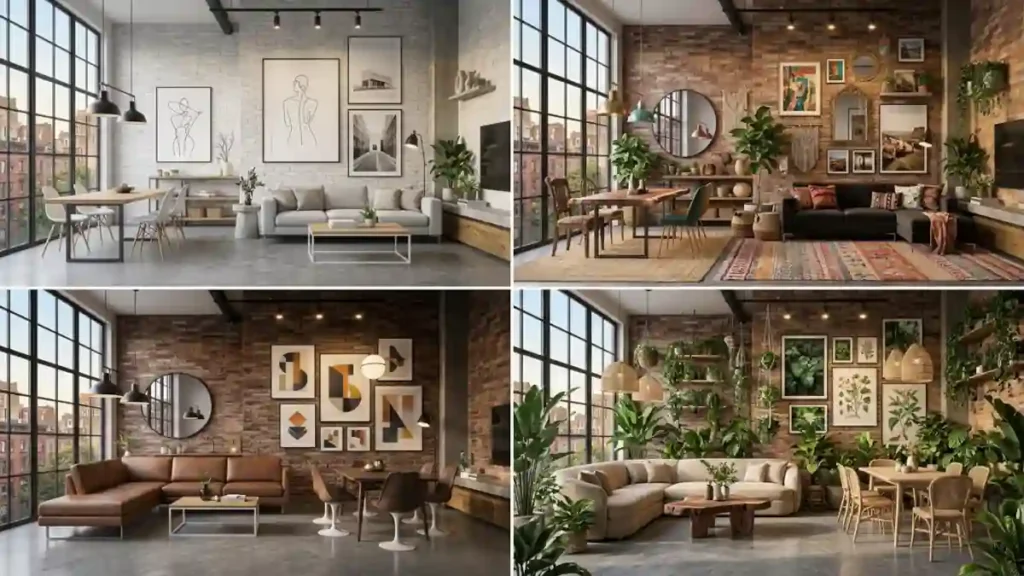
5. Gallery Wall Accent
A gallery wall transforms an ordinary wall into a personalized display of artwork, photographs, illustrations, and decorative objects.
Unlike traditional accent walls that rely on paint or construction materials, this design creates visual interest through carefully arranged framed pieces. It is particularly suitable for living rooms, staircases, hallways, and home offices.
For a balanced result, select a consistent frame color or a coordinated artwork palette. Black frames with neutral artwork create a contemporary appearance, while wooden frames introduce warmth.
You can arrange the frames in a symmetrical grid or use an organic layout with different sizes. Before hanging anything, arrange the artwork on the floor or create paper templates to test the composition.
How to create it:
- Select artwork and frames in different sizes.
- Establish a central alignment point.
- Arrange the frames on the floor.
- Transfer the layout to the wall.
- Install appropriate picture hooks and hang the artwork.
Materials: Picture frames, artwork, measuring tape, level, wall hooks, and hanging hardware.
Estimated time: 3–6 hours.
DIY difficulty: Beginner.

6. Wall Art Extravaganza
If you want your wall to become the main visual attraction in a room, consider creating a large-scale wall art feature.
This approach uses oversized artwork, decorative canvases, framed illustrations, murals, or a coordinated collection of art pieces to create a striking focal point.
A large abstract painting can complement a minimalist living room, while botanical artwork works beautifully in natural and organic interiors. For a more personalized appearance, combine artwork with floating shelves and a few carefully selected decorative objects.
The key is to maintain a visual connection between the artwork, furniture, and room color palette.
How to create it:
- Choose a theme or color palette.
- Select one large artwork or several coordinated pieces.
- Measure the wall and determine the ideal placement.
- Install the artwork securely.
- Add subtle lighting if you want to emphasize the display.
Materials: Canvas artwork, frames, wall hooks, floating shelves, and optional picture lighting.
Estimated time: 3–5 hours.
DIY difficulty: Beginner.
7. Modern Decorative Panel Wall
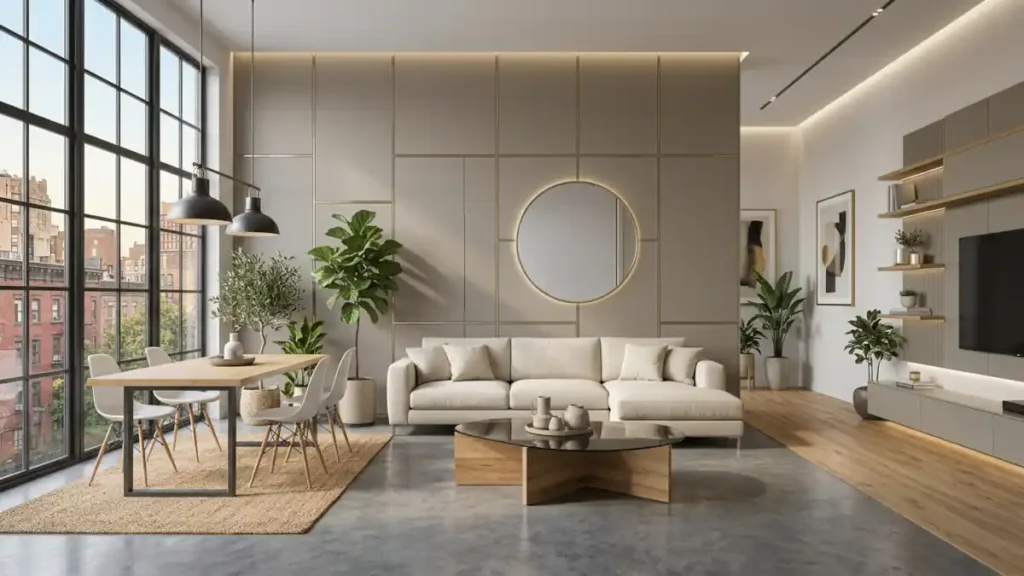
Modern decorative panel walls introduce architectural detail and a refined appearance through geometric panels, MDF boards, or contemporary wall cladding.
Unlike traditional board-and-batten designs, modern panel walls can feature larger sections, asymmetrical layouts, recessed details, and subtle shadow gaps.
Neutral colors such as warm gray, taupe, cream, and soft beige create an understated luxury appearance. For a bolder interior, consider deep navy, forest green, or charcoal.
This design works especially well in contemporary living rooms, formal dining spaces, and bedrooms.
How to create it:
- Plan a balanced panel arrangement.
- Measure and mark the wall.
- Cut MDF panels or decorative trim.
- Install using appropriate adhesive and fasteners.
- Fill joints and paint the complete surface.
Materials: MDF panels, decorative molding, adhesive, fasteners, caulk, primer, and paint.
Estimated time: 1–2 weekends.
DIY difficulty: Intermediate.
8. Bedroom Wallpaper Accent Wall
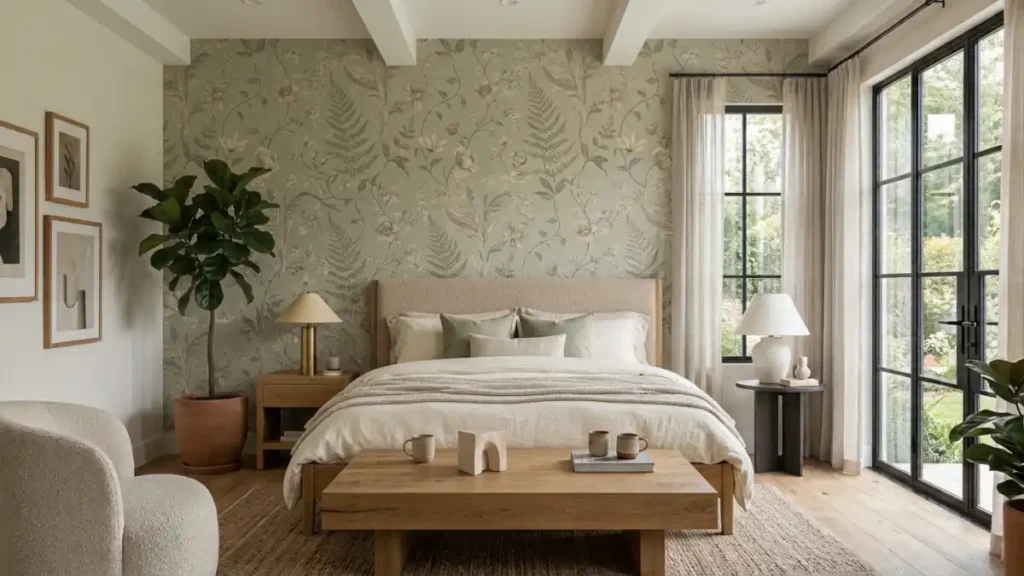
Wallpaper is one of the easiest ways to introduce color, pattern, and personality into a bedroom without undertaking extensive construction.
A wallpaper accent wall behind the bed creates a natural focal point while allowing the remaining walls to stay relatively simple. Popular choices include botanical patterns, subtle geometric designs, textured linen effects, abstract prints, and elegant floral motifs.
For a relaxing bedroom, choose muted green, soft beige, warm gray, or understated blue patterns. If you prefer a dramatic design, darker botanical wallpaper can add depth and sophistication.
Peel-and-stick wallpaper is particularly useful for renters because many products are designed to be removable. However, always check the manufacturer’s removal guidance and test compatibility with your wall paint.
Materials: Wallpaper, smoothing tool, measuring tape, utility knife, and optional primer.
Estimated time: 4–8 hours.
DIY difficulty: Beginner to intermediate.
9. Peel-and-Stick Wallpaper Accent Wall
Peel-and-stick wallpaper offers a convenient solution for anyone who wants to update a room without permanently changing its walls.
Unlike traditional wallpaper, this material comes with a self-adhesive backing that allows it to be applied directly to a suitable prepared surface.
It is available in numerous styles, including marble effects, wood textures, geometric patterns, floral designs, and contemporary prints.
This option is especially attractive for apartment renters, homeowners experimenting with new designs, and people looking for relatively quick weekend decorating projects.
For the best result, clean the surface, remove dust, and apply the wallpaper slowly to avoid wrinkles and air bubbles. Always test a small area before covering the entire wall.
Materials: Peel-and-stick wallpaper, smoothing tool, measuring tape, utility knife, and cleaning supplies.
Estimated time: 3–6 hours.
DIY difficulty: Beginner.

10. Living Plant Accent Wall
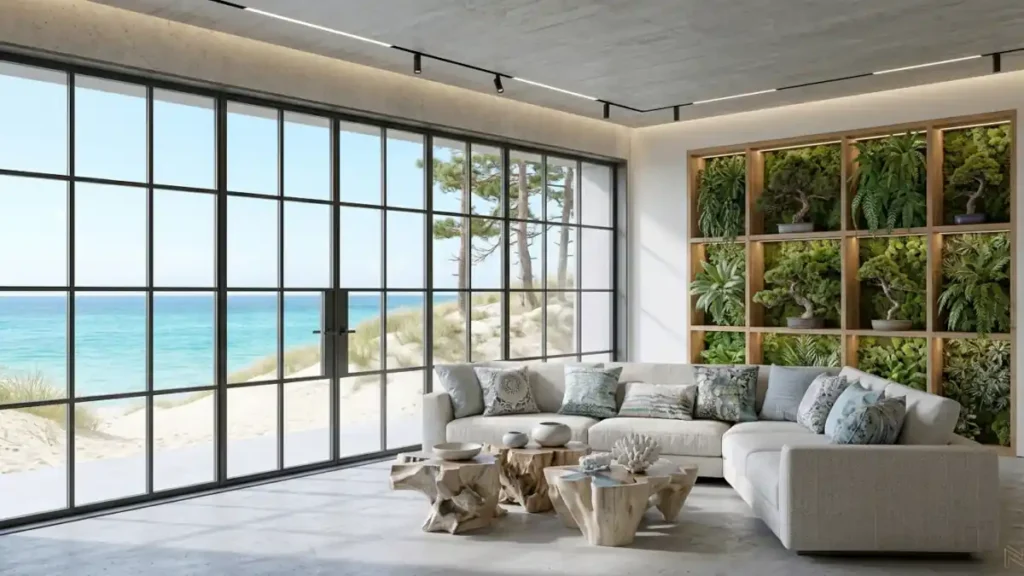
A living plant wall brings natural greenery into your interior and creates a refreshing connection between indoor and outdoor environments.
This biophilic design approach can include vertical planters, wall-mounted pots, modular growing systems, or carefully arranged shelves filled with indoor plants.
Popular plant choices include pothos, philodendrons, ferns, and other indoor varieties suited to the available light and humidity.
A living plant wall works especially well in living rooms, sunrooms, home offices, and bright dining areas.
However, plant selection and maintenance are important. Consider natural light, watering requirements, drainage, wall protection, and the weight of the installation before starting.
For a low-maintenance alternative, use preserved moss panels or high-quality artificial greenery.
Materials: Wall planters, suitable plants, mounting hardware, potting mix, waterproof protection, and optional irrigation equipment.
Estimated time: 1 weekend.
DIY difficulty: Beginner to intermediate.
11. Reclaimed Barn Wood Accent Wall
Reclaimed barn wood creates a warm, rustic appearance by introducing natural grain, weathered finishes, and subtle variations in color.
This design is ideal for farmhouse interiors, mountain-inspired homes, rustic living rooms, and cozy bedrooms.
You can use reclaimed timber with its original weathered appearance or choose new wood designed to resemble aged barn boards.
Horizontal planks create a traditional rustic look, while vertical installation offers a more contemporary interpretation. Mixing different wood tones can add depth, but maintaining a consistent overall palette helps prevent the wall from appearing too busy.
Before installation, ensure reclaimed wood is clean, dry, structurally sound, and free from pests or hazardous coatings.
Materials: Reclaimed or weathered wood planks, wall fasteners, saw, level, and wood finishing products.
Estimated time: 1 weekend.
DIY difficulty: Intermediate.
12. Industrial-Style Accent Wall
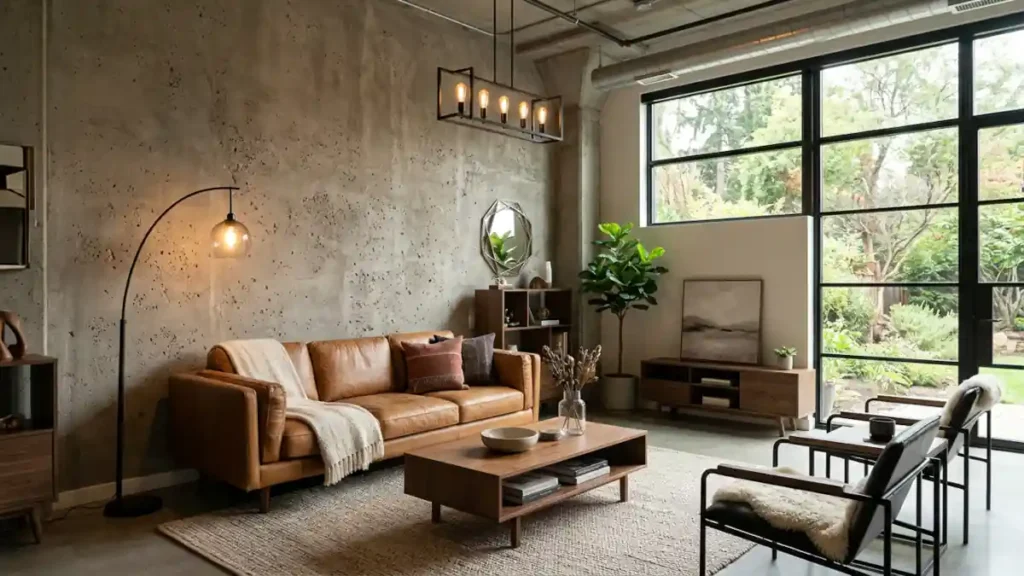
Industrial accent walls bring an urban and contemporary character to interior spaces through materials and finishes inspired by warehouses, factories, and converted lofts.
Common design elements include exposed brick, concrete-look panels, distressed metal, dark wood, and charcoal finishes.
You do not need to use actual industrial materials to achieve this aesthetic. Faux concrete wall finishes, lightweight brick panels, and textured wallpaper can create a similar appearance at a lower cost.
Combine these surfaces with black metal lighting, open shelving, reclaimed wood, and neutral furniture for a cohesive industrial-inspired room.
Materials: Concrete-effect paint, textured panels, faux brick, MDF, metal-look accessories, and appropriate installation supplies.
Estimated time: 1–2 days.
DIY difficulty: Intermediate.
13. Bold Black Accent Wall
A black accent wall creates dramatic contrast and gives a room a sophisticated, contemporary appearance.
Although darker colors may seem intimidating, they can work beautifully when balanced with lighter furniture, natural materials, and appropriate lighting.
Matte black is especially effective in modern living rooms, home offices, bedrooms, and dining areas. It also creates an excellent background for artwork, mirrors, decorative shelving, and metallic accessories.
For smaller rooms, consider using black on a single focal wall rather than covering every surface. Warm lighting and light-colored furniture can help maintain a comfortable atmosphere.
How to create it:
- Repair imperfections and clean the wall.
- Apply an appropriate primer if necessary.
- Use quality interior paint suitable for the surface.
- Apply two even coats according to product instructions.
- Finish the room with contrasting decor and lighting.
Materials: Interior primer, matte black paint, rollers, brushes, painter’s tape, and drop cloths.
Estimated time: 1 day.
DIY difficulty: Beginner.

14. Fabric Upholstered Accent Wall
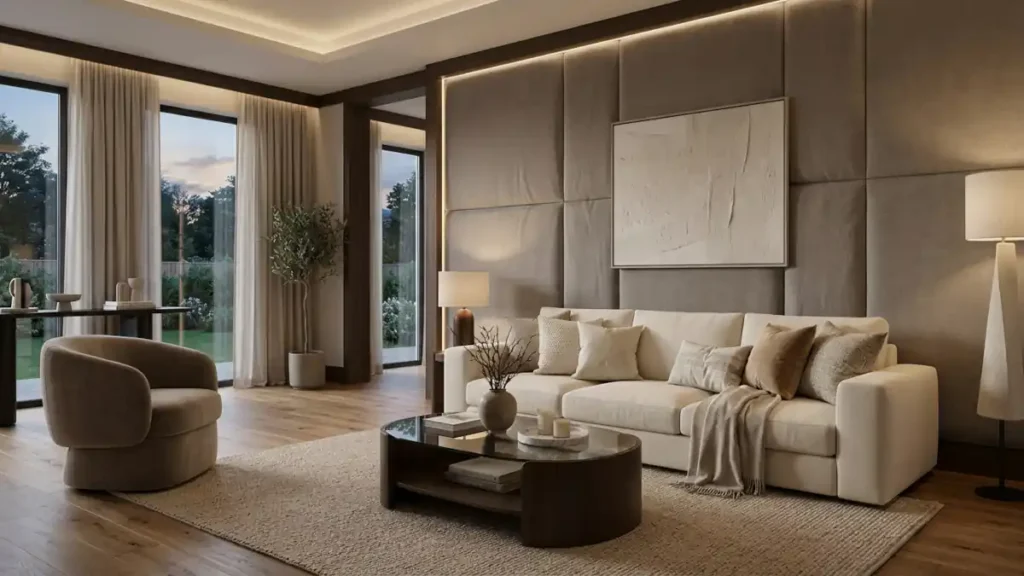
A fabric accent wall adds softness, warmth, and a comfortable appearance that is difficult to achieve with paint or traditional wall finishes.
It can be created using upholstered wall panels, decorative fabric boards, or textile-covered sections arranged in a coordinated pattern.
Velvet, linen, and textured upholstery fabrics are popular choices because they introduce visual and tactile interest.
This design is particularly suitable for bedrooms, reading areas, and home theaters. Upholstered panels can also help reduce sound reflections, although they should not be considered a substitute for professionally designed soundproofing.
For a polished appearance, choose fabric that complements the bedding, curtains, or furniture upholstery.
Materials: Upholstery fabric, backing panels, foam padding, adhesive or fasteners, and measuring tools.
Estimated time: 1–2 days.
DIY difficulty: Intermediate.
15. Mosaic Tile Accent Wall
A mosaic accent wall uses small pieces of tile, glass, stone, or other decorative materials to create intricate patterns and visually rich surfaces.
This design is particularly effective in bathrooms, kitchens, powder rooms, and selected living room features.
Mosaic tiles are available in a wide range of shapes, colors, and finishes, including marble, glass, ceramic, and natural stone.
For a modern appearance, consider neutral geometric mosaics or subtle combinations of white, gray, and beige. More colorful arrangements can create an artistic statement.
Unlike paint and wallpaper, mosaic installation requires careful surface preparation, tile cutting, adhesive selection, and grouting. If you are new to tiling, begin with a smaller wall section before attempting a large installation.
Materials: Mosaic tiles, tile adhesive, grout, spacers, tile cutter, trowel, and sponge.
Estimated time: 1–2 weekends.
DIY difficulty: Advanced.

16. Herringbone Wood Accent Wall
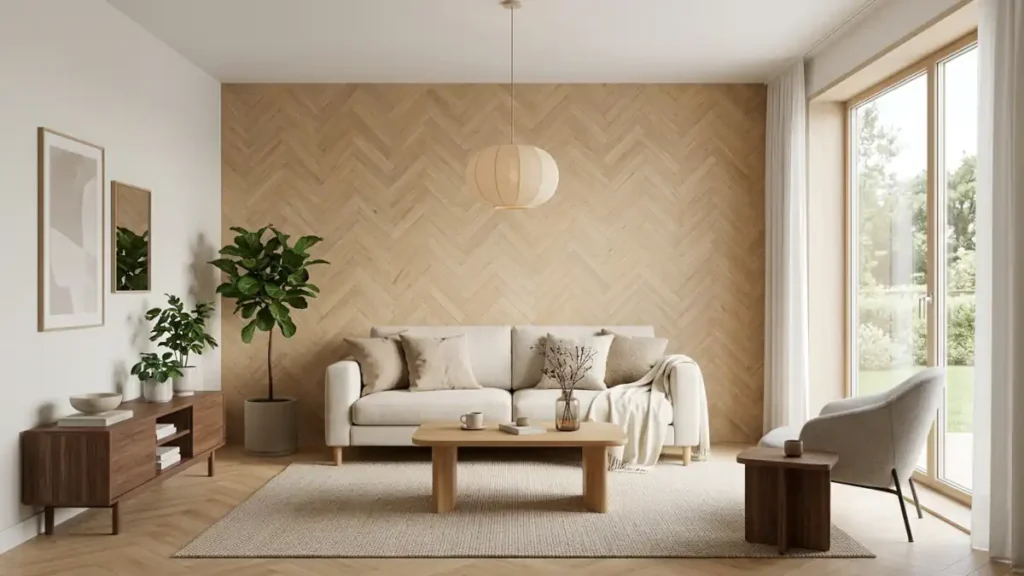
A herringbone accent wall uses rectangular wooden planks arranged in an alternating V-shaped pattern.
This classic arrangement creates movement and visual interest while adding a refined architectural feature to an otherwise simple wall.
Natural oak, walnut, and reclaimed wood are excellent material choices. You can also use painted MDF strips for a more budget-friendly interpretation.
A herringbone design looks especially attractive behind a bed, in a dining area, or as a living room focal point.
Before installation, carefully plan the central alignment and calculate the cutting angles. Accurate measurements are essential because small inconsistencies become noticeable across a large patterned wall.
Materials: Wood planks, measuring tape, miter saw, level, adhesive, fasteners, and wood finish.
Estimated time: 1–2 weekends.
DIY difficulty: Intermediate to advanced.
17. Artistic Stencil Accent Wall
A stencil accent wall offers an affordable way to introduce decorative patterns without purchasing expensive wallpaper or hiring a professional mural artist.
Stencils can create geometric shapes, botanical patterns, Moroccan-inspired motifs, repeating designs, and other decorative details.
This method works especially well in dining rooms, bedrooms, nurseries, and home offices.
For a subtle appearance, use a stencil color that is only slightly darker or lighter than the base wall color. For a more dramatic design, choose contrasting shades.
The most important part of stencil painting is maintaining consistent spacing and applying paint in thin layers to prevent bleeding around the stencil edges.
Materials: Wall stencil, painter’s tape, interior paint, stencil brush or roller, level, and drop cloth.
Estimated time: 1 weekend.
DIY difficulty: Beginner to intermediate.

18. Natural Stone Accent Wall
Natural stone accent walls introduce texture, depth, and an organic appearance that can make an interior feel more refined and timeless.
Popular materials include slate, limestone, granite, quartzite, and other decorative stone products. Depending on the product, the finished wall can have a rough split-face texture, smooth honed surface, or contemporary linear appearance.
Natural stone is especially attractive around fireplaces, in entryways, and on selected living room walls.
For a modern interior, choose large-format limestone or linear stone veneer. For a rustic appearance, stacked stone panels offer a more textured look.
Lightweight stone veneer panels can make installation more manageable, but actual weight, wall suitability, fire clearances, and manufacturer installation requirements must be checked carefully. Heavy or complex stone installations may require a qualified installer.
Materials: Approved stone veneer or panels, compatible mortar or adhesive, installation tools, and suitable wall preparation materials.
Estimated time: 1–2 weekends, depending on the product and installation area.
DIY difficulty: Intermediate to advanced.

4 Additional DIY Accent Wall Ideas Worth Exploring
The following four ideas expand your design options beyond traditional wood, wallpaper, and stone treatments. They are particularly useful if you want something more creative, modern, and visually distinctive.
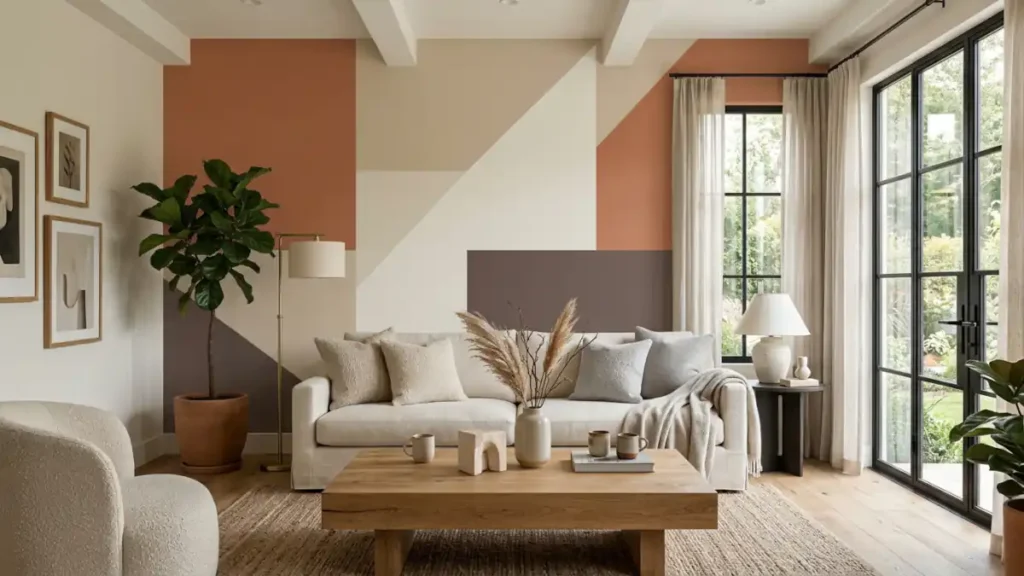
19. Geometric Painted Accent Wall
A geometric painted accent wall is an affordable way to create a modern focal point using only paint, painter’s tape, and a carefully planned design.
You can create triangles, oversized arches, diagonal sections, color blocks, or overlapping geometric shapes.
This style is particularly suitable for contemporary living rooms, children’s bedrooms, home offices, and small apartments.
For a sophisticated result, combine two or three complementary shades instead of using too many contrasting colors. Popular combinations include beige and terracotta, sage and cream, navy and soft gray, and charcoal with warm white.
How to create it:
- Choose a simple geometric pattern.
- Draw the design using a pencil and measuring tape.
- Apply painter’s tape along the planned boundaries.
- Paint each section with the selected color.
- Remove the tape carefully according to the paint manufacturer’s recommendations.
Materials: Interior paint, painter’s tape, measuring tools, brushes, rollers, and drop cloths.
Estimated time: 1 day.
DIY difficulty: Beginner.
20. Limewash Textured Accent Wall
A limewash accent wall is an excellent choice for homeowners who prefer natural-looking surfaces with subtle movement and depth.
Limewash-style finishes create a soft, cloudy appearance with gentle variations in tone. They can make a room feel warmer, more relaxed, and more organic than a standard flat-painted wall.
Popular colors include warm white, mushroom beige, soft taupe, muted olive, and light gray.
This finish works beautifully in Mediterranean-inspired homes, contemporary living rooms, bedrooms, and minimalist interiors.
For a genuine limewash finish, use a compatible mineral-based product and follow the manufacturer’s surface preparation instructions. Decorative limewash-effect paints may offer an alternative for different wall surfaces.
How to create it:
- Prepare the wall according to the coating requirements.
- Apply any required primer.
- Use the recommended brush or application technique.
- Build up the finish with overlapping brush strokes.
- Allow the coating to dry as directed.
Materials: Compatible limewash coating, primer, natural-bristle brush, protective sheets, and application tools.
Estimated time: 1–2 days.
DIY difficulty: Intermediate.

21. Picture Frame Molding Accent Wall
Picture frame molding is a timeless way to add architectural elegance to a plain wall.
This design uses decorative trim to create rectangular or square frames across the wall surface. It is inspired by traditional European interiors but can also look excellent in modern American homes.
For a classic appearance, choose symmetrical rectangular panels painted in white or warm cream. For a contemporary interpretation, paint the molding and wall in the same shade, such as charcoal, sage, or taupe.
This treatment is especially suitable for formal living rooms, dining areas, bedrooms, and entryways.
How to create it:
- Measure the wall and design the panel layout.
- Mark the frame positions with a level.
- Cut molding strips to the required lengths and angles.
- Attach the molding using suitable adhesive and finishing nails.
- Caulk the joints, fill gaps, prime, and paint.
Materials: MDF or wood molding, miter saw, measuring tape, level, adhesive, caulk, and paint.
Estimated time: 1–2 weekends.
DIY difficulty: Intermediate.

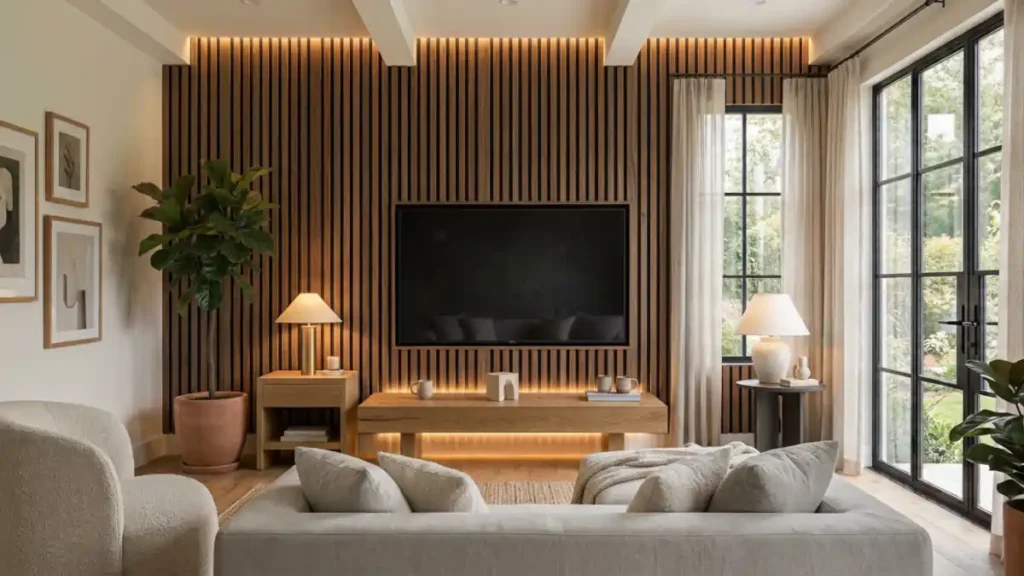
22. Acoustic Wood Slat Accent Wall
An acoustic wood slat accent wall combines decorative appeal with practical sound-management features.
It generally consists of narrow wooden slats mounted over a backing material, often a sound-absorbing felt layer. This combination creates a modern architectural surface while helping reduce certain sound reflections within a room.
Acoustic slat panels are particularly popular in home theaters, entertainment rooms, home offices, and contemporary living spaces.
Natural oak and walnut finishes create a warm appearance, while black backing provides attractive contrast between the slats.
For better performance, select products with documented acoustic specifications and follow the manufacturer’s installation requirements. Decorative slat panels alone should not be assumed to provide full soundproofing.
How to create it:
- Measure the installation area.
- Select acoustic panels suitable for the intended location.
- Locate wall studs and prepare the surface.
- Install the panels using approved fixings.
- Finish the edges with suitable trim.
Materials: Acoustic slat panels, backing materials, fasteners, measuring tools, level, and edge trim.
Estimated time: 1–2 days.
DIY difficulty: Intermediate.
How to Choose the Right DIY Accent Wall for Your Home
Choosing the right accent wall involves more than selecting an attractive color or material. The design should complement the room’s dimensions, existing furniture, natural lighting, and overall interior style.
Consider the following factors before starting your project.
1. Select the Right Wall
The best accent wall is usually a naturally visible surface that can serve as a focal point.
Common choices include:
- The wall behind the living room sofa.
- The wall behind a bedroom headboard.
- The wall surrounding a fireplace.
- The main wall in a dining room.
- The wall behind a home office desk.
- A prominent entryway wall.
Avoid selecting a wall simply because it is empty. Consider how people enter and move through the room, where furniture is positioned, and which surface naturally attracts attention.
2. Consider Room Size and Natural Lighting
Room dimensions and natural lighting can influence how an accent wall appears.
In smaller rooms, lighter colors, subtle patterns, and vertical designs can help create a more open visual effect. Darker colors can also work in small spaces, but they should be balanced with adequate lighting and lighter furnishings.
Large rooms provide more flexibility for oversized patterns, dark colors, natural stone, and textured wall treatments.
3. Choose a Coordinated Color Palette
Your accent wall should complement the existing interior rather than compete with it.
Consider these combinations:
| Accent Wall Color | Complementary Colors | Suitable Style |
| Sage Green | Cream, oak, beige | Organic Modern |
| Navy Blue | White, brass, gray | Contemporary |
| Terracotta | Warm white, walnut | Mediterranean |
| Charcoal | Cream, natural wood | Modern Industrial |
| Warm Beige | Ivory, taupe, oak | Minimalist |
| Forest Green | Brass, cream, walnut | Transitional |
Always test paint samples on the actual wall because lighting conditions can change how colors appear throughout the day.
4. Match the Design to Your Interior Style
Different accent wall treatments work better with particular decorating styles.
| Interior Style | Recommended Accent Wall |
| Modern | Wood slats, geometric paint, MDF panels |
| Farmhouse | Shiplap, reclaimed barn wood |
| Minimalist | Limewash, neutral paint, simple panels |
| Industrial | Faux brick, concrete finishes, dark paint |
| Traditional | Picture frame molding, wallpaper |
| Scandinavian | Light oak slats, soft neutral colors |
| Organic Modern | Natural stone, limewash, warm wood |
| Bohemian | Gallery walls, artistic stencils, greenery |
5. Establish a Realistic DIY Budget
The total cost depends on the wall dimensions, material quality, tools required, and complexity of installation.
Paint and peel-and-stick wallpaper generally require less investment than natural stone, custom woodwork, or mosaic tile.
Before purchasing materials, calculate the wall’s square footage:
Wall area = Wall width × Wall height
For example, a wall measuring 12 feet wide and 8 feet high has an area of 96 square feet.
Purchase the required materials according to the manufacturer’s coverage and recommended allowance for cutting waste.
Also include the cost of tools, primers, fasteners, adhesives, finishing products, and protective materials.
6. Consider Rental-Friendly Options
Renters can create attractive feature walls without making permanent structural changes.
Consider:
- Removable peel-and-stick wallpaper.
- Lightweight decorative wall panels.
- Freestanding display shelves.
- Removable wall decals.
- Artwork and gallery wall arrangements.
- Properly approved removable mounting systems.
Always review your lease and test removable products in an inconspicuous area before installation. Some adhesives can damage paint or drywall even when marketed as removable.
DIY Accent Wall Materials: Which One Should You Choose?
Selecting suitable materials is essential for achieving a durable and visually appealing result.
| Material | Best Application | Main Advantage | Consideration |
| Interior Paint | Geometric and solid-color walls | Affordable and versatile | Requires surface preparation |
| MDF | Batten and panel walls | Easy to shape and paint | Needs suitable moisture protection |
| Natural Wood | Slat and plank walls | Warm natural appearance | May require sealing |
| Peel-and-Stick Wallpaper | Rental-friendly designs | Quick installation | Surface compatibility matters |
| Faux Brick Panels | Industrial interiors | Brick appearance without masonry | Check panel quality and fire rating |
| Natural Stone | Fireplaces and feature walls | Distinctive texture and durability | Weight and installation requirements |
| Mosaic Tile | Decorative feature walls | Detailed patterns and finishes | More installation work |
| Fabric Panels | Bedrooms and media rooms | Soft texture | Requires regular care |
DIY Accent Wall Mistakes to Avoid
Even an attractive design can produce disappointing results if the planning and installation are rushed.
Here are common mistakes to avoid:
Choosing the wrong wall: An accent wall should complement the room’s layout and naturally draw attention.
Ignoring wall preparation: Dust, uneven surfaces, moisture, and damaged drywall can affect the final finish.
Using too many colors or patterns: Excessive visual elements can make a room feel crowded. Maintain a coordinated color palette.
Incorrect measurements: Poor spacing can make batten, panel, and geometric designs appear uneven.
Ignoring lighting: Always consider natural and artificial lighting when choosing dark colors or textured materials.
Buying insufficient materials: Measure the wall carefully and account for cutting waste, especially with patterned materials.
Using unsuitable adhesives or fasteners: Different surfaces and materials require compatible installation methods.
Overlooking safety requirements: Use appropriate protective equipment, follow tool instructions, and check electrical wiring and plumbing before drilling or cutting into walls.
Frequently Asked Questions About DIY Accent Wall Ideas
1. What is the easiest DIY accent wall to create?
A painted accent wall is generally one of the easiest options because it requires relatively few materials and basic painting skills. Peel-and-stick wallpaper and simple geometric painted designs are also beginner-friendly choices.
2. What is the cheapest way to create an accent wall?
Painting one wall is often the most budget-friendly approach. You can also use affordable MDF trim, simple stencils, or removable wallpaper to create visual interest without investing in expensive materials.
3. What is the best material for a DIY accent wall?
The best material depends on your design preferences, budget, and installation experience. Paint works well for simple designs, MDF is suitable for decorative panels, wood creates natural warmth, and stone adds distinctive texture.
4. Are DIY accent walls still in style in 2026?
Yes. Accent walls remain a useful interior design feature, particularly when they introduce meaningful materials, architectural detail, or visual depth. Natural wood, limewash textures, decorative paneling, and carefully selected wallpaper are among the versatile options for contemporary interiors.
5. Can I create an accent wall in a small living room?
Absolutely. A carefully selected accent wall can add personality to a small living room without requiring a complete redesign. Consider light wood slats, subtle wallpaper, soft neutral paint, or a simple vertical panel arrangement.
6. How long does it take to complete a DIY accent wall?
The timeline depends on the design and materials. A painted wall may take a single day, while wood slats, decorative molding, and wallpaper can take one or two days. Stone, mosaic, and more complex installations may require an entire weekend or longer.
7. Which wall should I choose for an accent wall?
Choose a wall that naturally serves as a focal point. In a living room, this may be the wall behind the sofa or television. In a bedroom, the wall behind the headboard is a common choice. Fireplace walls and prominent dining room walls are also popular options.
8. Can renters install DIY accent walls?
Yes. Removable wallpaper, wall decals, lightweight artwork, and freestanding decorative elements are useful renter-friendly solutions. Always check the product’s removal instructions and your rental agreement before installation.
9. Do accent walls make a room look bigger or smaller?
The effect depends on color, pattern, lighting, and room proportions. Light finishes and vertical details can create a more open visual impression, while dark colors and large patterns may make a wall feel more visually prominent.
10. How do I maintain a DIY accent wall?
Maintenance depends on the material. Painted walls may need occasional cleaning and touch-ups, wood panels may require appropriate dusting and refinishing, and wallpaper should be cleaned according to its manufacturer’s instructions. Natural stone may need periodic sealing depending on the stone and finish.
Conclusion
DIY accent walls offer an effective way to transform ordinary interiors into personalized spaces without committing to a complete renovation. From traditional shiplap and reclaimed wood to modern geometric paint, limewash finishes, acoustic panels, and natural stone, there are countless ways to introduce character and visual interest into your home.
The best design is not necessarily the most expensive or complicated. It is the one that complements your room, reflects your personal style, and fits your budget and installation experience.
Before starting, take time to measure the wall, compare materials, choose a coordinated color palette, and prepare the surface properly. These simple steps can make a significant difference in the finished result.
Whether you are updating a living room in Texas, refreshing a bedroom in California, or decorating a small apartment in New York, the right DIY accent wall can make your interior feel more welcoming, distinctive, and thoughtfully designed.
Start with a design that suits your space, choose quality materials, and turn an ordinary wall into a feature worth noticing.
Suggested Internal Links
Use relevant internal links such as: